
ANJANK Extra Loud Alarm Clock
4.4Editor score
Wireless rechargeable bed shaker
Customizable display and night light
Dual alarms with eight sounds
Explore the best alarm clocks for ADHD, comparing vibration, sound, lighting, timers, displays, backup power, comfort, and ease of use for daily use.
An effective alarm clock for ADHD should make waking up easier without requiring constant attention, negotiation, or complicated morning routines. Useful models combine adjustable sound, vibration, light, large displays, visual countdowns, and dependable scheduling to create several ways to notice that it is time to start the day.
The products in this guide were compared using the features and specifications supplied for each model. We focused on alarm strength, vibration support, visibility, scheduling flexibility, backup power, charging options, sleep-friendly lighting, timer functions, ease of setup, and the situations in which each clock may be most useful.
Each review shows which attention-friendly features stand out, as well as any limitations that could affect daily use. Ratings and specifications reflect the supplied product information, while product availability and prices can change, so readers should confirm current listings and features before purchasing.
4.4Editor score

4.5Editor score
4.2Editor score
This side-by-side comparison highlights the alarm methods, display features, scheduling options, and practical considerations that distinguish each model, from wearable vibration reminders to bedside units with wireless shakers and visual timers.


The Sonic Bomb Dual Extra Loud Alarm Clock is a conventional bedside alarm clock built around an unusually forceful combination of sound, vibration, and flashing light. Its 4.5 rating reflects a strong overall reception, and the product's defining feature is the 113dB alarm. For someone who routinely dismisses a normal alarm or has difficulty noticing an ordinary phone notification, that level of output can make the morning prompt impossible to ignore.
We may earn a commission when you buy through this link, at no additional cost to you.
Its strongest advantage is the range of ways it can deliver the alarm. Users can select vibration, buzz, or a combined vibration-and-buzz mode, while the wired bed shaker physically moves the mattress or pillow. The clock also uses red flashing alert lights, adding a visual cue that does not depend on hearing the sound. Adjustable volume and snooze timing, with alarm duration configurable from 1 to 59 minutes and snooze from 1 to 30 minutes, let the user establish a fairly precise routine rather than relying on a single fixed setting.
There are trade-offs. The bed shaker is wired, so the clock and shaker must be positioned together, and the unit does not offer the broad color customization, smartphone-style displays, or rechargeable wireless accessories seen in newer models. The red display and flashing lights are functional rather than decorative, which may be less suitable for users who want a soft bedroom aesthetic. Nevertheless, the directness of the design is an advantage because it provides several independent cues without depending on a phone, app, or complicated menu.
This is a strong recommendation for heavy sleepers, students, and anyone whose attention is better captured by a powerful physical cue than by a conventional digital chime. It is also appropriate for shared bedrooms when a lightless wearable would be inconvenient. Buyers should position the wired shaker where the vibration will transfer clearly through the mattress and confirm the alarm duration and snooze settings before relying on them. For straightforward, high-intensity waking, it remains one of the most purposeful choices in this guide.
The 113dB alarm, flashing red lights, and mattress vibration create several ways to register the wake-up cue. This combination can be especially useful when a person has become accustomed to ignoring softer alarms or frequently oversleeps through a single sensory warning.
Adjustable alarm duration and snooze intervals support a structured morning routine without forcing one fixed duration. Users can build in a short snooze for gradual transitions while keeping the main alert active long enough to prompt action.
We may earn a commission when you buy through this link, at no additional cost to you.
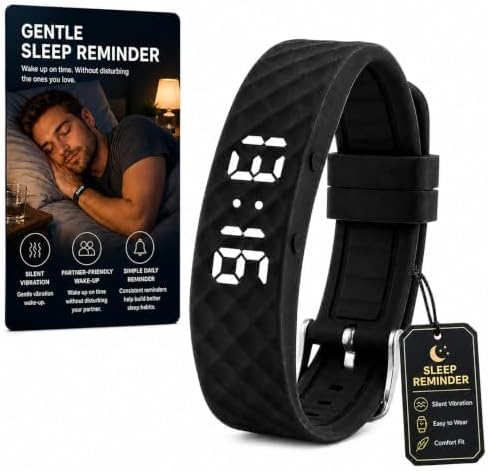
The Vibrating Wristband Alarm Clock offers a different approach from conventional bedside models by delivering reminders directly through a wearable bracelet. Its 4.2 rating reflects a useful feature set, but the real appeal is its ability to provide silent, private alerts. It is particularly relevant to people with ADHD who may ignore audio alarms, share a room, study in a quiet environment, or need reminders beyond a single morning alarm.
We may earn a commission when you buy through this link, at no additional cost to you.
The band supports eight independent vibration reminders, expanding its role from a one-purpose wake-up device into a general scheduling tool. Alarms can be assigned to waking, medication, classes, workouts, hydration, meals, or breaks. A loop countdown timer supports Pomodoro sessions, interval training, cooking, and medication schedules. The device also records steps, stores 30 days of activity data, tracks sleep from 11 p.m. to 7 a.m., and provides a sleep rating, although these tracking functions are supplementary rather than substitutes for a dedicated sleep specialist.
Comfort and practical charging are also positives. The soft silicone strap uses a diamond pattern, an adjustable multi-hole buckle, and a breathable design intended for extended wear. The display shows time, date, and weekday, can switch between 12- and 24-hour formats, and lights with a raise-to-wake gesture. A direct Micro USB plug provides charging, while the listed IP65 water and dust resistance should offer reasonable protection during handwashing, sweat, and light rain.
Its main limitation is obvious: the reminder only works if the person wears it and feels it. It is not a substitute for a bed shaker, an extremely loud room alarm, or a clock that remains visible across the bedroom. It is best for users who want multiple silent reminders and appreciate wearable routines, provided they charge the band and put it on before sleep. For discreet prompting, it offers excellent versatility at a relatively accessible tier.
Because the alarm is felt rather than heard, it can wake or remind one person without filling the room with sound. That makes it useful for dorm rooms, shared apartments, quiet offices, and homes where a loud bedside alarm would disturb others.
Eight independent alarms and a repeat countdown timer turn the band into a broader time-management tool. A consistent wearable cue can support medication, study blocks, hydration, and transitions throughout the day instead of limiting the device to a single wake-up event.
We may earn a commission when you buy through this link, at no additional cost to you.
The ANJANK Extra Loud Alarm Clock combines a powerful 112dB speaker, a wireless bed shaker, and a highly adjustable light display. Its 4.4 rating makes it one of the stronger all-around choices in the guide, particularly for users who want more control over the sensory experience than a standard alarm provides. The alarm can operate through sound, vibration, or both, and the front-facing speaker is designed to make the sound easier to hear.
We may earn a commission when you buy through this link, at no additional cost to you.
The wireless shaker is the centerpiece. It reaches up to 10 meters from the clock, uses a rechargeable 1500mAh battery, and offers three vibration intensities. Magnetic and Type-C charging are supported, while the bed shaker itself can run for up to a month on one charge according to the supplied information. This allows the user to put the vibration device under a pillow, near the edge of the mattress, or in another comfortable position without a cable crossing the bed.
The lighting system is unusually flexible. The main display supports white, red, blue, and RGB gradient colors with brightness adjustment from 0 to 100 percent. A separate night light offers nine color choices, including a rainbow flow, six brightness levels, and an off mode. There are also two independent alarms, eight gradual sounds, ten volume levels, and a Type-C phone-charging output. These options can make the morning routine more visually guided while keeping the bedside display comfortable at night.
The important trade-off is power resilience. The supplied information specifically states that the main clock has no battery backup and must remain plugged in. Only the wireless shaker is described as rechargeable. Users concerned about outages should not assume the clock's loud alarm and display will continue working without external power. Within that limitation, this is an excellent choice for someone seeking a modern, customizable, multi-sensory bedside setup with flexible lighting and strong physical vibration.
The clock can use a loud alarm, bed vibration, or both, allowing the user to build a wake-up routine around more than one cue. The wireless shaker's three intensity levels also make it possible to test the setup and find a level that is noticeable without being excessively disruptive.
Separate display and night-light controls provide a dark setting for sleep, a gentle color for waking, and clear time visibility when needed. The broad color and brightness ranges are useful for people who find an abrupt illuminated screen jarring or who need a more noticeable visual prompt.
We may earn a commission when you buy through this link, at no additional cost to you.
The Acedeck Super Loud Alarm Clock is built around a single clear objective: producing an alarm loud enough to wake heavy sleepers. Its 4.5 rating is strong, and the headline 115dB output is the highest maximum volume specified among the bedside models in this guide. It does not add a bed shaker, wearable alert, or elaborate sleep-tracking features, but its direct sound-focused design may appeal to someone who dismisses ordinary alarms.
We may earn a commission when you buy through this link, at no additional cost to you.
Six alarm sounds provide some variety without making the controls unnecessarily complicated. Two independently set alarms support separate weekday and weekend schedules, while the snooze function allows a controlled second attempt. The 4.2-inch LED screen is large enough to check from across a bedroom, and its adjustable brightness allows the display to be toned down at night. A built-in USB port provides a convenient way to charge a phone while the clock is active.
Power management is a clear strength. The clock normally runs on AC power, while AAA batteries preserve the alarm memory and permit outage operation. The supplied note makes an important distinction: the batteries support memory backup and alarms during outages, but they are not charged by the clock and should not be treated as a full secondary power system. This design gives users a dependable alarm setting even when the room temporarily loses power.
Its limitation is the absence of a physical vibration option. A person who does not respond to sound may still sleep through this model, while one of the shaker-equipped alternatives would offer another sensory route. The Acedeck is best for a dorm room, teen bedroom, or shift-worker setup where a very loud, simple alarm and dual scheduling are the priorities. It is a compelling choice for users who want a large display and outage support without a more complicated bedside system.
The 115dB maximum output is designed to cut through a deep sleep or close a bedroom door. Six sound options allow users to choose a less irritating tone when possible while retaining serious output for the days when a gentle prompt is not enough.
Two alarms and retained settings make the clock practical for changing routines. Battery backup helps preserve the schedule and sound an outage alert, reducing the chance that a temporary power disruption will erase the morning plan.
We may earn a commission when you buy through this link, at no additional cost to you.
The Alarm Clock with Bed Shaker is a practical middle ground between a basic bedside clock and a more elaborate multi-sensory unit. Its 4.2 rating reflects a versatile feature set, including three wake-up configurations: sound only, bed shaker only, or sound combined with the shaker. This lets the user decide which alerts are appropriate instead of committing to one fixed method.
We may earn a commission when you buy through this link, at no additional cost to you.
The 7.8-inch LED display is the model's most visually prominent feature, offering large numerals and brightness adjustment across eight levels. It can be useful for checking the time without walking close to the clock, although the display remains visible while powered and cannot fully switch off. Setup controls are clearly labeled, and the unit supports 12- or 24-hour time, daylight saving time, two independent alarms, a nine-minute snooze, and alarm-pause controls for the next 24 hours.
Backup operation is handled through two AAA batteries, which preserve time and alarm settings during an outage. The display turns off while running on backup to conserve power, but the alarm still sounds. A 5V/1A USB output allows a phone or another small device to be charged overnight. The clock itself runs on AC power, so the batteries are not the primary operating source.
The supplied information appropriately notes that the audible buzzer may not satisfy someone expecting an extremely loud or screaming alarm, and vibration effectiveness depends on mattress type and placement. The wired bed shaker also requires more setup than a wireless device. Still, the three operating modes, sizable display, and backup functionality make this a balanced recommendation for heavy sleepers who want to experiment with sound and physical vibration.
Sound-only, shaker-only, and combined operation allow the alarm to match the user's sensitivity and household setup. Someone can begin with vibration, add sound gradually, or disable an irritating sound while retaining a physical prompt.
The 7.8-inch display and eight brightness levels improve time visibility without requiring a phone. Automatic display-off during backup conserves battery power while retaining the ability to sound the saved alarms.
We may earn a commission when you buy through this link, at no additional cost to you.
The DreamSky Vibrating Alarm Clock emphasizes portability and straightforward vibration-assisted waking. Its 4.4 rating makes it a strong all-around option, and the clock can be placed on a nightstand, bed, mattress, under a pillow, or beneath a quilt. A supplied rope lets the user secure the portable unit to a bed or desk so it is not misplaced, offering more placement freedom than a permanently attached wired shaker.
We may earn a commission when you buy through this link, at no additional cost to you.
Vibration strength can be selected across five levels: 20, 40, 60, 80, or 100 percent. The user can wake to vibration alone or to a combination of beeping and vibration. A separate shake-off control stops the current alarm and allows it to recur the next day, while a dedicated snooze button provides nine additional minutes. The alarm itself runs for five minutes, giving the user a defined window in which to respond.
The rechargeable battery eliminates routine disposable-battery changes, and the power indicator shows remaining charge. A low-battery icon provides an additional warning, while the included power adapter simplifies charging. The clock also uses automatic daylight saving time and offers selectable 12- or 24-hour displays. Pressing any button illuminates the backlight for 15 seconds, making nighttime time checks easier without requiring a permanently bright screen.
The main trade-off is the absence of an identified battery backup for the clock itself. Because it is rechargeable, a power interruption or a missed charge could affect the scheduled alarm. Its appeal is therefore strongest for someone who values flexible placement, gradual intensity controls, and fewer setup steps. It is a good fit for heavy sleepers, students, travelers, and users who prefer putting the vibration source directly under or near their pillow.
The portable clock can be moved to wherever mattress transfer is strongest, including under a pillow or quilt. Users can begin at a lower vibration level and increase it gradually, reducing the chance that the device is either missed or unnecessarily disruptive.
After selecting the local time zone, automatic daylight saving and selectable time formats reduce the need for repeated clock adjustments. The brief illuminated backlight also keeps nighttime checks simple without adding another control to the morning routine.
We may earn a commission when you buy through this link, at no additional cost to you.
The Odokee Digital Alarm Clock is a straightforward, highly readable bedside clock for people who respond better to a large visual time display and a loud, simple alarm. It carries a 4.5 rating and offers a maximum alarm volume of 110dB, with an adjustable range from 30 to 110dB. That broad range supports both a gentle nighttime start and a much more insistent wake-up when necessary.
We may earn a commission when you buy through this link, at no additional cost to you.
The display uses two-inch bold numbers and a bright screen designed to be visible across a room. Five brightness levels let the user dim it overnight or turn it off, while 12- and 24-hour formats suit different preferences. Five alarm sounds—birds chirping, beep, soft music, Ode to Joy, and siren—can be selected, and the gradual increase described in the product information avoids requiring the alarm to start at maximum intensity.
The clock also includes an eight-color night light that can be turned off or adjusted for a softer bedroom atmosphere. A nine-minute snooze provides a short additional period, and front-mounted setup buttons make the controls more approachable than a deeply layered menu. A USB charging port supplies convenient phone charging, and the included AC adapter supports normal operation.
During a power outage, two AAA batteries preserve the alarm so it can still sound at the scheduled time. Batteries are not included, and the display does not light while running on backup. The unit has no bed shaker or wearable vibration, so it is less suitable for a person who cannot respond to sound. For a dorm, bedroom, or shared home where visual readability and adjustable audio are the main needs, however, the Odokee provides a clear and approachable solution.
Two-inch numbers and a bright display can be checked at a distance, reducing the need to reach for a phone or squint at a small screen. Multiple brightness levels preserve that visibility during the day without making the clock intrusive at night.
The broad 30-to-110dB range and five sound choices allow the alarm to start gently or become highly insistent. A gradual increase can make the transition less jarring while preserving enough volume for heavy sleepers.
We may earn a commission when you buy through this link, at no additional cost to you.
The Buffbee Alarm Clock with Sound Machine is designed for people who want the entire sleep environment to support a calmer morning. Its 4.4 rating reflects a well-rounded sleep-focused feature set. Rather than concentrating only on maximum alarm output, it combines 24 calming sounds with a graduated alarm, ambient lighting, and display brightness adjustment, making it a different choice from the heavy-sleeper models in this guide.
We may earn a commission when you buy through this link, at no additional cost to you.
The sound machine includes white noise and nature-inspired audio intended to help mask street noise, racing thoughts, or a restless shared sleeping space. Its alarm offers birdsong, waves, a beep, brook, and piano tones, with a gradual progression intended to wake the user without the abrupt impact of a harsh buzzer. This may be particularly relevant for ADHD users whose mornings are disrupted by an overly startling alarm that creates resistance or a negative association with waking.
The seven-color ambient light provides a soft visual element for winding down or navigating a dark room. Display brightness adjusts from 0 to 100 percent, allowing the time to be nearly invisible while sleeping and more visible when needed. Because the clock is designed to create a soothing routine rather than overpower a deep sleeper, the supplied information does not provide a maximum dB rating, and there is no bed shaker or wearable vibration.
This is best for a person whose sleep onset is slowed by background noise, who prefers gentle alarms, or who wants one device to handle both bedtime sound and morning waking. It is less suitable as the only alarm for someone who routinely ignores all but extremely loud or physical prompts. Used alongside a more forceful clock, it could provide a gentler sleep environment and a less stressful transition into the day.
Twenty-four calming and nature-inspired sounds can make bedtime more consistent by masking environmental distractions. A familiar audio cue can also become part of a repeated routine that signals the body and mind that sleep is approaching.
Graduated soft tones and adjustable display brightness create a less jarring transition than a harsh, brightly lit clock. This approach is better suited to users who respond well to a calm environment and a gentle increase in sensory input.
We may earn a commission when you buy through this link, at no additional cost to you.
The Amazon Basics Small Digital Oval Alarm Clock takes a deliberately simple approach. Its 4.4 rating reflects a dependable core set of functions rather than an assortment of advanced alarms. The compact 4.5 by 3.5 by 2.4-inch body is easy to place on a nightstand, desk, or small bedside surface, and the oval shape gives it a familiar, uncomplicated appearance.
We may earn a commission when you buy through this link, at no additional cost to you.
A 0.7-inch green LED display shows the time at a glance, while the built-in nightlight provides a soft glow in a dark room. A repeating snooze function allows a user to delay the alarm without complicated programming. The clock is AC powered through an integrated supply, and backup batteries can retain the time and alarm settings for up to eight hours. Batteries are not included, and the user manual should be consulted for the exact backup arrangement and operating instructions.
Its simplicity cuts both ways. There is no stated maximum alarm volume, no vibration option, no adjustable display brightness, and no collection of sound options. As a result, it is unlikely to be the strongest choice for a very heavy sleeper, someone with hearing impairment, or a user who depends on a physical wake-up cue. The fixed green display and limited information also make it less useful for multi-stage time awareness than larger models with richer displays.
The Amazon Basics clock is most appropriate as a simple backup, bedroom clock, or first alarm for someone who does not need elaborate features. Its small size and repeating snooze make it easy to understand at a glance, while the short-term backup protects recently set alarms during a brief power interruption. It offers a useful baseline against which more specialized ADHD-friendly features can be compared.
The compact enclosure, familiar green display, and uncomplicated snooze control leave little room for confusion. This simplicity can help preserve a morning routine by keeping the number of decisions and buttons small.
Backup batteries preserve the time and alarm settings for up to eight hours. Although this is not a full-featured backup system, it provides a useful safety net for a brief outage and avoids losing the morning schedule.
We may earn a commission when you buy through this link, at no additional cost to you.
The Visual Timer 4-in-1 Alarm Clock is built around visual time awareness, making it especially relevant for users who benefit from seeing how much time remains rather than relying only on a conventional alarm. Its 4.4 rating and broad set of functions distinguish it from the plain bedside models. The large high-definition LCD shows the time, date, weekday, alarm settings, and a circular visual countdown bar that tracks progress from 0 to 60 minutes.
We may earn a commission when you buy through this link, at no additional cost to you.
The countdown can be stopped, cleared with a three-second press, and used for focus sessions, study blocks, exercise intervals, or cooking. Three independent alarm settings support several routines without requiring the user to rewrite every schedule. A silent electronic movement eliminates ticking, while switchable 12- and 24-hour formats make the display adaptable to different users. The clock's wide screen also allows status information to remain visible from a desk, office, kitchen, or bedside table.
The built-in 400mAh battery and Type-C charging port make the unit portable, although the supplied information recommends using a cable for optimal performance. It is not a bed shaker or wearable alarm, so it is best for people who can respond to a visible or audible bedside prompt. Its distinctive advantage is the visual progress bar, which can make an allotted study or task period feel concrete without requiring continuous attention to a changing number.
This is a strong recommendation for students, professionals, and ADHD users who benefit from externalizing time into a visible format. It can support both a morning alarm and repeatable daytime focus routines. Users should keep the device charged, test the three alarms during setup, and establish a consistent place where the screen remains visible. It may not be the primary choice for someone who requires physical vibration, but it adds a useful visual dimension to an attention-supportive routine.
The circular progress bar turns an abstract interval into an observable visual process. Seeing the remaining portion decline can help structure study, work, exercise, or rest without repeatedly checking the time in another app.
Three alarm settings support separate morning, work, and evening routines. The silent movement and comprehensive display make the clock practical for shared rooms where ticking would be distracting.
We may earn a commission when you buy through this link, at no additional cost to you.
The right alarm for ADHD is one that creates a clear, repeatable cue without requiring a complicated morning process. Consider the kinds of prompts you notice most reliably, your sleep environment, the need for backup power, and the routines the clock must support beyond waking up.
Prioritize a prompt that can interrupt the specific pattern causing missed mornings. In general, choose strong sound for auditory response, a bed shaker for physical response, a wearable for discreet use, or a visual timer when seeing time remaining is most useful.
Test several intensity levels and positions before settling on a routine. If vibration is the main plan, choose a model with a range of strengths and a placement method that fits the bed rather than relying on the loudest possible sound.
Choose backup operation that matches the user's risk of outages. Battery-backed models are safer for essential wake-up reliability, while rechargeable models may be more convenient but require charging discipline and a backup device.
Favor large numerals and adjustable illumination, not merely a high-resolution screen. The goal is a time display that is easy to interpret without adding more visual stimulation than the room needs.
Use separate alarms for genuinely different schedules rather than filling every day with redundant alerts. Choose a snooze interval long enough to feel restful but short enough to prevent another prolonged sleep cycle.
A clock that supports study blocks, medication, movement, and breaks may be more valuable than one that only offers a louder morning sound. Select the model whose extra functions match routines that are currently difficult to maintain.
Aim for a clock that can become almost invisible at bedtime and then increase gradually in the morning. Separate controls for the alarm, time display, and ambient light offer the most adaptable sleep-friendly setup.
Set up the clock while calm and fully awake, then confirm each alarm, snooze control, display mode, and backup function. Simplicity is often more valuable than a long feature list when the alarm must work without daily troubleshooting.
Begin by choosing a consistent place for the clock, display, and any shaker. A bedside unit should be visible without shining directly into the eyes, while a bed shaker should be placed where vibration transfers through the mattress without creating a loose cable. Wearable users should charge the band fully and put it on before sleep rather than waiting until the alarm sounds. Establish a short test routine using each alarm once or twice before trusting it for an important morning.
Configure the schedule with realistic intentions. Choose separate alarms only for schedules that truly differ, set the snooze to a manageable interval, and adjust alarm or vibration intensity gradually. Test the strongest waking cue when you are very tired, but avoid repeatedly blasting the device without purpose. For a visual timer, define exactly what the interval represents, such as one study block, and decide what happens when the circular bar reaches its endpoint.
Care for the device according to its power and environmental specifications. Keep plug-in clocks on stable surfaces, recharge portable units before the battery indicator is low, and replace backup batteries on a schedule if the model uses disposable cells. Clean the display and controls with a dry, soft cloth rather than moisture, especially around openings. Periodically confirm that the alarm, vibration connection, display, and backup settings still work, and adjust the setup whenever the mattress, room lighting, or daily schedule changes.
The most useful type depends on which cues you notice consistently. Some people respond best to a very loud alarm, while others need vibration, light, or a visible countdown. A strong general-purpose choice combines an adjustable sound with a second method, such as a flashing display or bed shaker. A wearable can also help by providing silent reminders throughout the day.
A vibrating alarm can be useful when a person regularly ignores sound or shares a bedroom, but it is not universally better. Its effectiveness depends on mattress density, shaker placement, vibration intensity, and whether the wearer is wearing a device. A combined sound-and-vibration model offers more flexibility, allowing the user to test which prompt produces the most consistent response.
Yes, if it provides an external cue rather than requiring you to remember the time. Visual timers, large displays, wearable reminders, and multiple scheduled alarms can make task durations and transitions more concrete. The best option is one that matches the routine, such as a 60-minute focus timer for study or repeated medication and hydration prompts throughout the day.
A phone can be useful when it is placed away from the bed and used consistently, but its alerts may blend into other notifications. A dedicated clock can provide a stronger, more specialized cue, independent power backup, a large display, vibration, or a visual timer. A wearable adds another layer by allowing the phone to remain out of reach while still delivering private prompts.
Choose a short, fixed snooze interval and pair it with a physical action, such as sitting up, placing both feet on the floor, or opening a curtain. Graduated or flashing alerts can also make the transition more noticeable than a familiar tone. Avoid repeatedly extending the snooze because each additional cycle can make returning to sleep easier and delay getting started.
The essential feature is an alarm that can still sound without grid power. Look for models that explicitly support battery-backed alarm operation rather than merely retaining settings. Also note when the display turns off and whether backup batteries are included, since some units require separate disposable cells and others provide no backup for the main clock.
It can be, particularly when the main challenge is falling asleep or reacting poorly to a harsh alarm. A sound machine may help create a consistent bedtime routine, while gradual tones and dimmable lighting can make waking gentler. However, it is not the strongest primary alarm for a very heavy sleeper who requires maximum volume or physical vibration.
Set only the number of alarms that correspond to real differences in your routine. Two is often enough for separate weekday and weekend schedules, while a wearable or visual timer may support more reminders for classes, medication, exercise, hydration, and focus sessions. Too many alerts can create background noise, so it is better to use distinct, purposeful cues than to fill the day with repeated alarms.
The Sonic Bomb stands out for reliable multi-sensory waking with a 113dB alarm, flashing lights, and a wired bed shaker. The ANJANK offers the most feature-rich bedside setup with wireless vibration, extensive lighting controls, dual alarms, and phone charging. The Vibrating Wristband is the best budget-oriented choice for silent, private reminders and broader daily scheduling, while the DreamSky and ANJANK are strong alternatives when wireless or portable vibration placement matters most.
Prioritize the cue you can reliably perceive rather than the clock with the longest feature list. Heavy sleepers may need maximum sound or physical vibration, shared rooms may benefit from a wearable, and students may gain more from a visual focus timer and graduated wake-up routine. The most effective setup is also the one you can charge, position, and operate consistently, because reliability matters more than novelty.
Ratings, product features, and availability can change, and current prices should be checked on the linked listings before buying. Comparing the model against your mattress, room lighting, schedule, and power situation will help narrow the field and lead to an alarm clock that supports a steadier, less effortful morning routine.
