
New IR Remote Control for Dish Network 20.1
3.7Editor score
Designed for 20.1 receivers
Infrared, not Bluetooth
Includes setup manual
Supports television code setup
One-year warranty
This Dish Network Replacement Remote guide compares ten options for compatibility, setup, voice features, remote control, and ease of use.
A Dish Network replacement remote should match your receiver, restore the functions you use, and integrate with your television without unnecessary setup. The right choice depends on whether your system uses an older infrared receiver, an upgraded 54 series, or a Hopper-family device, as well as whether voice search and illuminated keys matter to you.
The remotes in this guide were compared using the supplied compatibility information, control methods, pairing requirements, special features, ratings, and intended equipment. The list includes upgraded 54-series replacements, 20.1 infrared models, a universal 21.1 remote, and options made for Hopper, Joey, and Wally receivers.
Each review explains the strongest reasons to consider that model, along with limitations that could affect compatibility or convenience. The top picks highlight different priorities, including easy setup, voice control, and comprehensive receiver support. Availability and prices can change, so confirm your receiver model before purchasing.
3.7Editor score

4.6Editor score

4.6Editor score
This side-by-side comparison organizes every remote by receiver compatibility, connection type, setup demands, and notable features, making it easier to match a replacement with your Dish equipment.


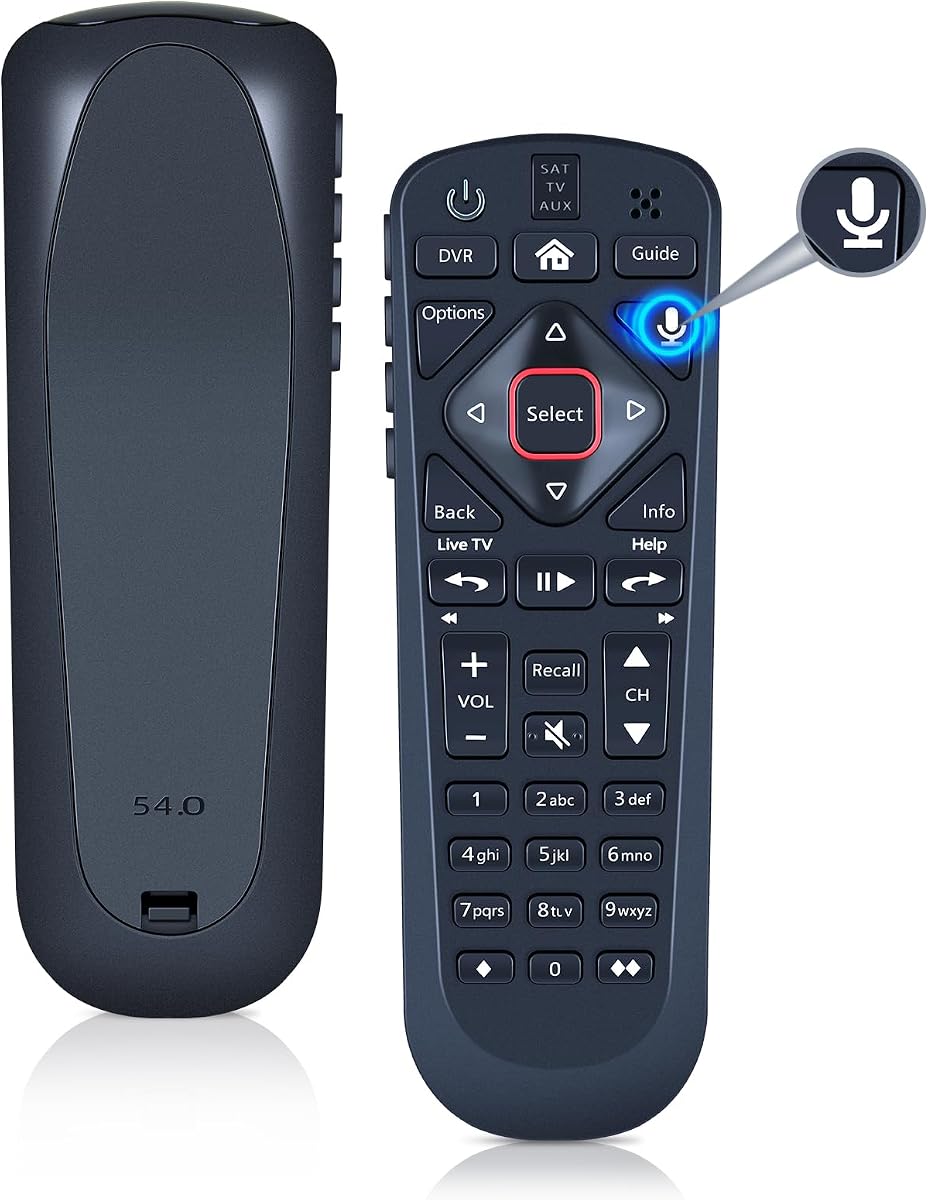


This FQOUG replacement targets Dish Upgraded Network 54.1, 54.2, and 54.3 Series UHF receivers, giving it a clear role as a modern replacement for compatible systems. Its 4.5 rating reflects a generally favorable user reception, while the combination of voice search, UHF control, and structured pairing guidance makes it one of the most versatile options in the guide.
We may earn a commission when you buy through this link, at no additional cost to you.
Its strongest feature is the UHF connection. Because the remote is not restricted to a conventional infrared line of sight, it can be more convenient in a crowded entertainment center or when the receiver sits behind cabinetry. Voice search adds another layer of convenience, allowing users to look for programs and On Demand content without navigating a channel guide one selection at a time.
The receiver activation process is clearly described: open the receiver's front panel, press the SYS INFO button, and then press the side SAT button until three beeps confirm activation. A separate television pairing wizard can connect the remote to a TV and potentially an auxiliary device such as a Blu-ray player or stereo. That flexibility is useful, but it does make setup more involved than simply inserting batteries.
This is the strongest general recommendation for someone who has confirmed compatibility with a 54.1, 54.2, or 54.3 UHF receiver. It is particularly attractive if you want voice search and do not want to aim an infrared remote directly at the receiver. Verify the receiver generation first, and be prepared to follow the pairing and unpairing instructions carefully.
UHF operation can provide more practical positioning freedom than an infrared remote, especially when the receiver is enclosed or viewed at an angle. The remote still needs compatible Dish hardware, but its signal does not depend on a strict visual path.
The supplied unpairing sequence covers both the SAT and Home-plus-Guide procedures. Having clear recovery steps can make a replacement feel less frustrating if the remote is initially paired with the wrong receiver or television.
We may earn a commission when you buy through this link, at no additional cost to you.
This remote is built around the Hopper family of receivers, including Joey and Wally equipment, and carries a 4.6 rating. Rather than merely replacing basic channel-changing buttons, it offers the feature set associated with Dish's higher-tier television experience, including voice search, personalization, illuminated keys, and a remote locator.
We may earn a commission when you buy through this link, at no additional cost to you.
Voice search is the most useful addition for anyone who wants to find a program, recording, or On Demand title without scrolling through menus. The keypad illuminates automatically when the remote is picked up in a dark room, which is a small but meaningful quality-of-life feature during late-night viewing. Programmable hot keys can launch an app, start recording, or activate closed captions.
The remote locator is another thoughtful addition. Pressing the corresponding button on the DVR makes the remote beep and blink, reducing the need to search manually around furniture cushions or entertainment cabinets. The tradeoff is that full voice-search functionality requires internet connectivity, and the product is not positioned as a broad replacement for unrelated receiver generations.
Choose this model if your equipment belongs to the Hopper, Joey, or Wally family and you want more than a basic infrared substitute. It is also a strong choice for users who frequently navigate recorded content or want customizable controls. Confirm that your receiver is in the supported family, especially if you have an older 20.1 or 21.1 system.
Search by voice can be much more efficient than opening the guide and repeatedly navigating. The feature reaches into the channel guide, recorded programs, and On Demand selection, although the complete search experience needs an internet connection.
Automatic key illumination makes the buttons easier to identify without manually switching on a light. It is especially valuable for quick navigation during dim evening viewing or late-night recordings.
We may earn a commission when you buy through this link, at no additional cost to you.
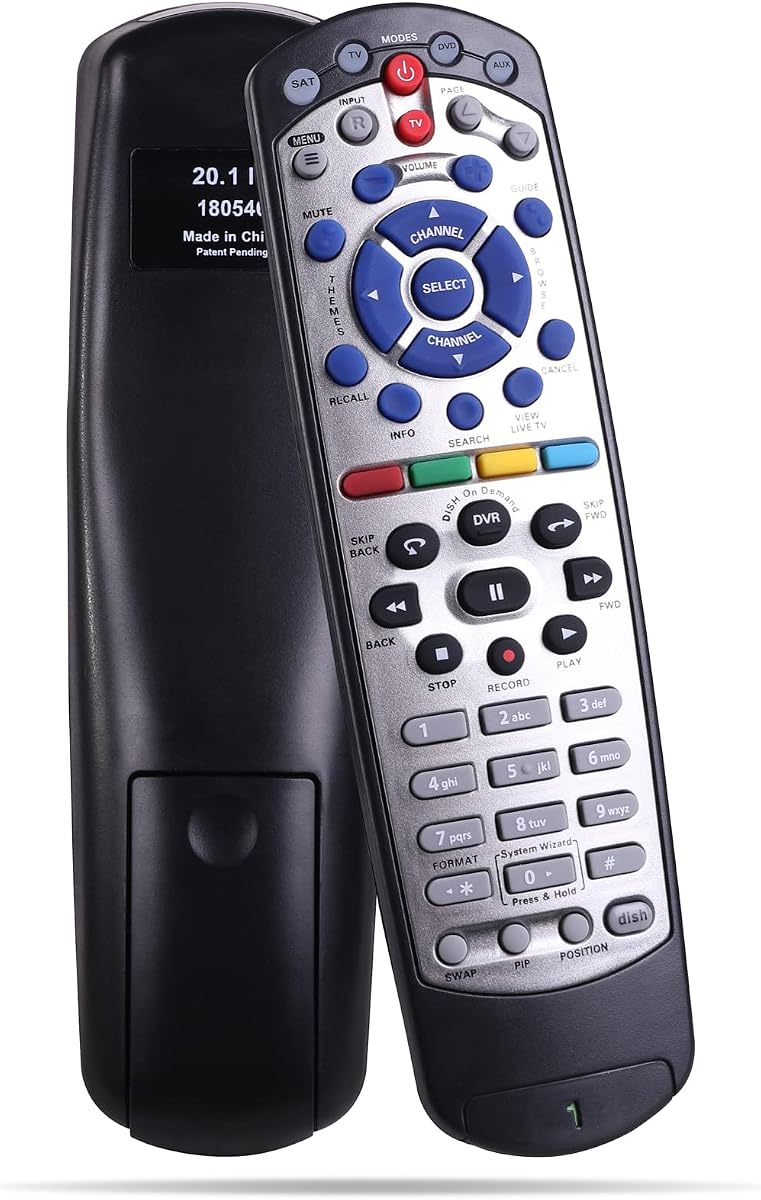
This infrared remote is intended for Dish Network 20.1 IR satellite receivers and related TV, DVD, and VCR control. Its 3.7 rating is lower than those of the leading choices, but the product addresses a straightforward replacement need: providing familiar infrared control without the more complex capabilities of a Hopper-style remote.
We may earn a commission when you buy through this link, at no additional cost to you.
The listing explicitly identifies the product as an infrared remote rather than a learning remote, and it does not have Bluetooth functionality. That clarity helps buyers set expectations: this is a direct signal replacement for compatible 20.1 equipment, not a universal remote that discovers every device on its own. A manual is included and walks through pairing and selecting the code for the television brand.
Setup is the principal drawback. Unlike models that only require two AAA batteries, this remote must be programmed with the correct television code before it can control the TV. Infrared operation also means it generally needs a usable line of sight to the receiver. Those limitations may be unimportant if the goal is simply to restore control of an older Dish installation.
This model is best for a confirmed 20.1 IR receiver user who values a simple, dedicated replacement and is comfortable programming the television. It is less suitable for people seeking voice search, illuminated controls, or a remote designed for the Hopper ecosystem. Verify the receiver designation before ordering because the product does not offer the broader feature set of the top-ranked alternatives.
Infrared sends a line-of-sight signal to the Dish receiver. For compatible equipment, this can provide a direct replacement experience without learning functions or Bluetooth connection requirements.
The included manual explains pairing and television code selection. Buyers should have the television brand available during setup so the correct code can be entered before testing power and volume controls.
We may earn a commission when you buy through this link, at no additional cost to you.
This FQOUG replacement covers Dish Upgraded 54.0, 54.1, 54.2, and 54.3 UHF receivers, giving it broader stated series coverage than the first-ranked model. It includes voice search and the same broad activation and television pairing approach, although its 3.7 rating suggests the experience may be less consistent across setups.
We may earn a commission when you buy through this link, at no additional cost to you.
Its primary appeal is the 54.0 inclusion. If the receiver is one of the listed upgraded models, the remote can combine UHF operation with voice-based searching and pairing for a TV or auxiliary device. The SYS INFO and SAT activation process is clearly explained, which is helpful because UHF remotes typically need an electronic pairing action rather than only battery installation.
There is an important compatibility exception: this remote does not work with a Dish Hopper 3 receiver. That restriction matters because the product description mentions the upgraded 54-series family, and buyers might otherwise assume all Hopper-style equipment is covered. Two 1.5-volt AAA batteries are needed, but they are not included, adding a small extra step to first use.
This remote makes sense for someone whose receiver is specifically identified as an upgraded 54.0 through 54.3 unit and who wants voice search. It may be a better fit than a model limited to newer subversions, but it is not appropriate for Hopper 3 owners. Confirm the exact receiver and read the pairing notes before making a final decision.
Support spanning 54.0 through 54.3 can simplify the decision for owners who are unsure of a minor receiver revision. It does not extend compatibility to unrelated receiver families or the excluded Hopper 3.
Beyond Dish control, the remote can be paired with a television and auxiliary equipment through the onscreen wizard. This expands convenience while making correct pairing more important.
We may earn a commission when you buy through this link, at no additional cost to you.
The WDZP replacement combines support for Dish Upgraded 54.0, 54.1, 54.2, and 54.3 UHF systems with voice search. Its 4.2 rating places it above the other 54-series voice replacement in the supplied data, and the built-in microphone adds a convenient way to locate programming without navigating with directional buttons.
We may earn a commission when you buy through this link, at no additional cost to you.
The receiver activation procedure follows the familiar SYS INFO and SAT sequence, with three beeps indicating a successful connection. Users then add two AAA batteries and navigate through Home, Settings, Remote Control, TV, and the TV Pairing Wizard. Auxiliary pairing is also possible for a player or stereo, making this more than a bare replacement for basic Dish navigation.
Its 4.2 rating and six-month warranty indicate a generally positive but not flawless proposition. The warranty is shorter than the one-year coverage stated for several 20.1 infrared remotes in this roundup, so buyers who value a longer assurance period may prefer a different option. Compatibility is also limited to the listed upgraded hardware.
This is a strong candidate for a compatible 54-series owner who wants voice search and flexible device pairing. It is especially relevant when the remote must operate for a Hopper setup within the stated supported system. Confirm the receiver version, keep two AAA batteries on hand, and review the six-month coverage before ordering.
The built-in microphone allows users to ask for programming rather than repeatedly moving through menus. Voice search is the defining feature of this model and is its main reason to favor it over simpler infrared replacements.
The pairing wizard can be used for a television and an auxiliary device such as a player or stereo. This reduces the number of physical remotes needed in a compatible home entertainment setup.
We may earn a commission when you buy through this link, at no additional cost to you.
The Dish Network 21.1 IR/UHF PRO Universal Remote is designed for 21.1 DISH TV receivers and supports TV1 and TV2 locations. Its 4.4 rating is among the strongest in the group, giving it a positive user signal even though the supplied product information is concise.
We may earn a commission when you buy through this link, at no additional cost to you.
The IR/UHF designation gives it an important distinction from the dedicated 20.1 infrared remotes. That can make it a better match for newer receiver arrangements that rely on wireless communication. Supporting both TV1 and TV2 also matters for households that use two television locations from the same Dish setup.
Compared with the voice-equipped 54-series models, this product offers a more traditional remote proposition. Voice search, illuminated keys, programmable hot keys, and a locator function are not identified in the supplied details, so buyers should not assume those benefits. Its appeal lies in receiver compatibility and the option to manage two television locations.
Choose the 21.1 PRO when your equipment is explicitly a 21.1 receiver and you need TV1 and TV2 support. It is less suitable for a 20.1 IR system or a household seeking voice-driven search. Because the listing provides limited feature information, verify button layouts and functions against your receiver before purchase.
TV1 and TV2 support is the defining practical benefit. It suits users whose Dish service reaches more than one television location or whose installation requires control of both outputs.
IR/UHF capability allows this model to align with compatible 21.1 hardware regardless of the receiver's preferred control method. That flexibility is more useful than a remote designed strictly around one signal type.
We may earn a commission when you buy through this link, at no additional cost to you.
This replacement focuses on Dish 20.0 and 20.1 TV1 receivers and emphasizes a remarkably simple startup. It does not require programming or pairing with the Dish receiver; after inserting two AAA batteries, it is ready to use. Its 4.1 rating suggests broad satisfaction with that straightforward approach.
We may earn a commission when you buy through this link, at no additional cost to you.
The compatibility list is unusually extensive for a replacement product. It includes numerous receiver identifiers such as VIP 622, 722, 222, 522, 625, 942, 201, 211, 301, 311, 322, 351, 1000, 2200, 2700, 2800, 2900, 3000, 3200, 3700, 3800, 3900, 4000, 4100, 9200, 5200, 6000, 6100, 6131, 6400, 9242, and HD PVR models. Buyers should still verify the number printed on their own equipment.
The main benefit is reduced friction. Without a learning function, television programming, or receiver pairing sequence, this is closer to a drop-in restore for the specified hardware. The tradeoff is that it lacks the convenience features found in newer remotes, and infrared signals generally need a clear path toward the receiver.
This is an appealing choice for a 20.0 or 20.1 TV1 owner who wants the least complicated replacement possible. It is less suitable for someone who needs voice search, advanced device pairing, or a remote specifically designed for the Hopper family. Keep the receiver model number handy and compare it with the published list before ordering.
The remote stores the receiver settings and is ready to work once two fresh AAA batteries are installed. This removes the need for a learning or code-entry process during initial setup.
The long list of supported receiver identifiers can help legacy owners confirm a match. It covers many common Dish models, but the label on the receiver remains the authoritative reference.
We may earn a commission when you buy through this link, at no additional cost to you.
This two-pack provides two remotes for Dish 20.0 and 20.1 infrared receivers. That makes it especially practical for homes with more than one television location, a family sharing a receiver, or anyone who prefers to keep a backup close at hand. Its 4.3 rating is a positive sign for the package as a whole.
We may earn a commission when you buy through this link, at no additional cost to you.
The remotes are described as rigorously quality tested before shipment, and the package includes an instruction sheet with simple setup visuals. They use two AAA batteries each, although batteries are not included. After inserting them, users set the television model number, which is needed to enable appropriate TV power, volume, and input functions.
The inclusion of two units is the defining advantage, but it does not change the underlying technology. This is an infrared remote for 20.0 and 20.1 systems rather than a UHF, Bluetooth, voice, or Hopper-focused replacement. It therefore suits legacy installations where direct infrared operation is desired and simple TV control is enough.
Buy this option when you specifically want two matching remotes for compatible 20-series equipment. It is a sensible choice for households with multiple TV locations and a backup remote need. Ensure that your receiver model falls within the stated range and that you are comfortable programming the television model before both remotes are ready for daily use.
Having a second remote prevents a lost or damaged unit from interrupting viewing. It also allows one remote to remain near each of two television locations.
The compact design is intended to be comfortable to hold and less likely to slip. Its universal infrared functions can replace an older remote while preserving access to the receiver's standard controls.
We may earn a commission when you buy through this link, at no additional cost to you.
This new infrared remote is intended for Dish Network 20.1 IR satellite receivers and related television, DVD, and VCR functions. Its 4.0 rating reflects a positive but modest reception, and it offers a simple alternative for owners whose original 20.1 remote has stopped working.
We may earn a commission when you buy through this link, at no additional cost to you.
The remote uses two AAA batteries and includes a manual showing how to pair it and select the correct code for the television. That television setup is required before use, which is the main step separating this model from a no-programming replacement. Once configured, it is designed to perform similarly to the original unit.
The one-year warranty provides longer stated coverage than the six-month warranty attached to one of the 54-series voice models. It also offers more direct replacement orientation than the two-pack, though that does not make it a better value if a backup remote is needed. As an infrared product, it has no stated voice, Bluetooth, backlight, or locator functionality.
This is a reasonable pick for a confirmed 20.1 IR user who wants a focused replacement, a manual, and a one-year warranty. It is better suited to a single television location than to a household seeking UHF freedom or voice search. Read the manual before first use and have your television brand ready for code selection.
The remote is specifically presented as a replacement for the 20.1 infrared system. This focused approach can be easier to understand than a broader universal remote with several operating modes.
A supplied manual walks through pairing and television code choice. Following it before use prevents the common disappointment of discovering that power or volume controls do not respond.
We may earn a commission when you buy through this link, at no additional cost to you.
The Dish Network Remote 52.0 is a feature-focused replacement for all Hopper, Joey, and Wally receivers. Its 4.6 rating ties for the highest rating in the supplied data, making it a strong premium recommendation for compatible Dish households that value everyday convenience.
We may earn a commission when you buy through this link, at no additional cost to you.
The remote finder function allows the receiver to trigger beeping and blinking from the remote, which is valuable when a frequently used device disappears between cushions or behind furniture. Automatic backlit keys illuminate whenever the remote is picked up in a dark setting, improving visibility without requiring a separate flashlight.
Personalization is another major benefit. Hot keys can launch Netflix, start a recording, turn on closed captioning, or launch other preferred functions. These shortcuts reduce repeated menu navigation, although voice search is not identified in the supplied product information. Compatibility is also specialized: this is not positioned as a replacement for 20.1 or 21.1 receivers.
Choose the 52.0 if you own a Hopper, Joey, or Wally receiver and want the locator, backlighting, and customizable hot keys as a complete package. It is the best premium option in this guide because it combines broad support across the named receiver family with features that improve daily use. Confirm hardware compatibility before ordering.
Pressing the appropriate button on the receiver triggers the remote's locator function. Beeping and blinking make it much easier to locate than searching manually through every room.
Programmable hot keys can place recording, captions, Netflix, and other favorite functions within easy reach. This personalization turns a replacement into a tailored controller for the household's viewing habits.
We may earn a commission when you buy through this link, at no additional cost to you.
Compatibility is the essential starting point, but connection method, setup tolerance, voice search, lighting, and receiver coverage can determine which replacement will be most convenient. Use the model number on your Dish receiver to narrow the options before comparing features.
In short, verify the exact receiver model before buying, then check that the listing explicitly names a matching series or receiver family.
In short, use infrared when it matches a confirmed legacy receiver, and consider UHF when you want easier positioning or own one of the listed upgraded systems.
In short, favor minimal setup for straightforward restoration, but choose a pairing process when the added television or auxiliary control is worth the extra steps.
In short, voice search is valuable on confirmed compatible systems, but it should supplement rather than replace receiver compatibility as the first selection criterion.
In short, prioritize backlighting, hot keys, and a locator if they solve recurring frustrations more often than voice search does.
In short, buy a two-pack when redundancy matters, and verify TV1 and TV2 support when your Dish installation serves more than one television.
In short, compare warranty duration and support after confirming the remote fits your receiver, because coverage cannot fix an incompatible product.
Before installing batteries, verify the receiver series and read the included instructions. Identify the required battery type, which is commonly two AAA batteries for the models in this guide, and note any stated exclusions. For a remote that pairs with the receiver, complete the SYS INFO and SAT activation sequence before attempting television control.
Follow the television setup instructions next. Depending on the model, this may involve selecting the television brand from a code list, using a pairing wizard, or performing no additional setup. If the remote does not respond, check the batteries, make sure the correct receiver code is selected, and use the supplied unpairing sequence before attempting to pair again. Avoid pointing an infrared remote through cabinet doors or from an extreme angle.
Treat the remote as a reusable electronic accessory rather than a disposable one. Remove the batteries if it will sit unused for a long period, clean the exterior with a dry or lightly dampened cloth, and keep liquids away from the buttons and battery compartment. Replace weak batteries promptly, and periodically check that the remote still controls the intended receiver, television location, and any paired auxiliary device.
Check the receiver model number on the front panel or in the receiver's System Information screen, then compare it with the compatibility statement in the product listing. Match the receiver family and signal type rather than relying on the shape of the original remote. A 20.1 receiver, an upgraded 54-series receiver, and a Hopper device use different compatibility categories, so the closest visual match may still be wrong.
Do not assume so. The 20.1 infrared replacements are described specifically for 20.1 receivers, while the Hopper-oriented models are listed for Hopper, Joey, or Wally equipment. Compatibility is determined by the listed receiver support and the receiver's control method. Confirm the hardware model before ordering rather than relying on shared Dish branding or a visually similar button layout.
An infrared remote sends a light-based signal and generally needs line of sight to the receiver. A UHF remote uses radio-frequency communication, which can make positioning easier when the receiver is behind cabinetry or viewed at an angle. UHF models in this guide may also require electronic pairing through the receiver's SYS INFO and SAT controls.
It depends on the model. The Dish 20.1 TV1 remote is specifically described as requiring no Dish programming, while several other options require television code entry or a TV pairing wizard. Voice-equipped 54-series remotes may also need receiver activation. Read the supplied instructions and identify your television brand before first use so setup can be completed without interruptions.
For a compatible 20.0 or 20.1 TV1 receiver, the Dish 20.1 TV1 Remote is the simplest option because it only needs two AAA batteries and does not require programming or pairing. Remote controls with television code lists, UHF activation, or pairing wizards offer more device integration, but they take additional steps. Ease of setup should be balanced against the features your household actually needs.
No. Voice search is explicitly listed only for certain upgraded 54-series models and is not identified for the 20.1 infrared replacements, the 21.1 PRO, or the 52.0 remote. Hopper voice-search functionality can also require internet connectivity for the full experience. Check the feature list and receiver compatibility before assuming voice commands will be available.
The remote may still need television control configured. Models with a pairing wizard or television code list must be set up with the correct television brand before power, volume, or input functions work. Review the manual, confirm the selected code, and repeat the pairing process if necessary. Receiver programming and television programming are separate steps for many replacements in this guide.
One remote is sufficient for a single television location when there is no need for a spare. A two-pack is more practical for multiple rooms, several family members, or keeping a backup nearby, although you will still need to configure television control on each unit. Make sure your receiver is a compatible 20.0 or 20.1 IR model before choosing the two-pack.
The Dish 54.0 Hopper Remote is the leading feature-focused choice for supported Hopper-family equipment, combining voice search, a backlit keypad, programmable hot keys, and a remote locator. The Upgraded 54 Series UHF Remote is a strong alternative for confirmed 54.1 through 54.3 users, while the Dish 20.1 TV1 Remote wins when the priority is an uncomplicated replacement with no Dish programming.
Your receiver model should determine the choice more than any cosmetic feature. Older 20.1 users should focus on the infrared options and decide between battery-only setup, a code-programmed remote, or a two-pack. Hopper owners should compare voice search, illuminated controls, and hot keys, while upgraded 54-series users should verify the exact series and whether they need television or auxiliary pairing.
Before ordering, check the receiver label, read the compatibility limitations, and compare the required setup with your tolerance for programming. Prices and availability change, so confirm current listings and seller details before purchasing. With those checks completed, you can choose a replacement that restores control without paying for features your Dish equipment cannot use.