
Easycargo Thermal Glue
4.4Editor score
Silicone thermal bond
Non-electrically conductive formula
Suited to heatsink attachment
Adhesives for electronic components vary widely. Compare 10 options across thermal performance, electrical behavior, precision, curing, and repair applications.
Adhesives for electronic components must balance secure bonding with protection from moisture, heat, vibration, and electrical exposure. The right choice depends on whether the job requires thermal transfer, flexible sealing, precision placement, structural attachment, or electrical conductivity.
This guide compares ten products spanning silicone sealants, thermal adhesives, precision repair glues, and conductive epoxies. We evaluated the stated specifications, intended uses, cure behavior, material compatibility, electrical characteristics, and practical repair functions, while recognizing that each product serves a distinct role.
The list shows where precision bonding, heat dissipation, moisture sealing, and electrical conductivity matter most, revealing which options suit phones, circuit boards, LEDs, heatsinks, and other electronics. Product ratings and availability can change, and current prices should always be checked before purchasing.
4.4Editor score

4.6Editor score
4.5Editor score
The comparison below organizes all ten products by their primary function, material behavior, cure characteristics, and stated electronic applications, making it easier to identify the right adhesive for a specific repair or assembly task.


This electronic silicone adhesive sealant earns a 4.6 rating and stands out as a broad protective coating for circuit boards, cables, transformers, coils, control boards, and photovoltaic power supplies. Its high-viscosity, insulating formula is intended to create a permanent, flexible barrier rather than merely holding two parts together.
We may earn a commission when you buy through this link, at no additional cost to you.
The stated protection range of minus 50°C to 200°C is one of its most useful features. Water resistance, low-temperature stability, impact resistance, and ductility make it relevant to electronics exposed to changing temperatures, condensation, dust, or incidental moisture. Its transparency is also useful when a protective layer should not obscure component inspection.
This is not an electrically conductive adhesive, so it should not be chosen to establish a current path or replace a thermal interface compound. The waterproof, elastic coating is more appropriate for sealing and insulation, and careful application is still necessary to achieve even coverage without deposits.
Choose it when the priority is environmental protection across multiple component types rather than a single structural repair. For general electronics sealing, conformal coating, and insulation, it offers the most versatile combination of temperature tolerance, moisture resistance, and stated application breadth in this list.
The listed applications range from compact circuit boards and control boards to cables, transformers, photovoltaic supplies, and coils. This makes the sealant a practical choice when one protective product must cover several types of electrical assembly.
A stated minus 50°C to 200°C range, combined with waterproofing and low-temperature flow stability, gives the cured layer useful protection in demanding electronic environments.
We may earn a commission when you buy through this link, at no additional cost to you.
This two-tube T-7000 adhesive carries a 4.6 rating and targets precision work on phones, tablets, laptops, cameras, electronic components, jewelry, and crafts. Its 3200mpa concentration and 30% to 35% solid content are presented as indicators of a strong bond, while the black color makes application easy to see on many surfaces.
We may earn a commission when you buy through this link, at no additional cost to you.
The needle dispenser and anti-clog cap are particularly important for compact electronic assemblies. They help users place a controlled amount near small connectors, housings, and delicate components without flooding the work area. The adhesive is also described as waterproof and flexible, with the ability to stretch up to 900% of its original length.
The main compromise is cure time: the instructions call for at least 24 hours. Its strong adhesion claims also extend across silicone, acrylic, and rubber comparisons, so compatibility should be verified before committing an important assembly. The manufacturer advises testing a small area and using the product only for general repairs and crafts.
It is a sensible budget choice for phone and consumer-electronics repairs when controlled dispensing and flexibility matter. The two included tubes offer practical project capacity, while the applicator makes the product more approachable than a large squeeze bottle for intricate work.
A needle applicator helps place adhesive in confined areas and around small parts. The anti-clog cap is also useful for preserving the remaining adhesive between carefully stored repair sessions.
The stated waterproof, highly elastic characteristics make this adhesive relevant to repairs that may encounter vibration, minor movement, or changing material dimensions after assembly.
We may earn a commission when you buy through this link, at no additional cost to you.
This 10g silicone thermal adhesive has a 4.4 rating and is aimed at jobs where a heatsink must be secured while heat moves away from a component. Listed targets include GPU VRM and VRAM areas, IC chips, MOSFETs, voltage regulators, high-power LEDs, 3D-printer assemblies, and TEC1-12706 Peltier modules.
We may earn a commission when you buy through this link, at no additional cost to you.
Its defining attributes are high thermal conductivity, low thermal impedance, strong adhesion, and a permanent bond. The product is non-electrically conductive and non-corrosive, which makes it useful where a thermal interface should not create an unintended electrical route across sensitive circuitry.
Thermal performance depends on applying the material consistently and maintaining close contact between the component and heatsink. It is a structural heat-conducting bond rather than a general-purpose waterproof sealant, and users should match the adhesive to the physical requirements of the specific module.
This product is best for hobbyists and technicians permanently attaching supported heatsinks or thermal hardware on PCBs. It is especially attractive when the goal is to replace loose thermal paste applications with a bonded mechanical and thermal interface.
Unlike a conventional paste that remains squeezable, this silicone adhesive is designed to become a lasting bond. That can help retain cooler placement while transferring heat through the compound.
The product targets several common thermal assemblies, including transistors, LEDs, GPUs, voltage regulators, printers, and Peltier modules, giving it broader utility than a single-device thermal compound.
We may earn a commission when you buy through this link, at no additional cost to you.
This silicone viscous thermal adhesive receives a 4.6 rating and publishes several useful specifications: thermal conductivity of 0.975 W/m-K, tensile strength of 2.1 MPa, and an approximate 30-minute drying time at 25°C. It is positioned for directly bonding MOSFETs, LEDs, ICs, GPU chipsets, and other heat-generating components to heatsinks.
We may earn a commission when you buy through this link, at no additional cost to you.
The adhesive is described as electrically non-conductive despite the product's broader thermal-adhesive description. It is odorless, moisture-proof, non-toxic, and non-expanding, while its adhesion is stated to work with most metals and non-metals. The approximately 30-minute cure can reduce the time required before a repaired assembly is returned to service.
A clear limitation appears in the product information: this thermal adhesive cannot be used between a CPU and heatsink. It also cannot overcome a poorly aligned or uneven interface, since a thermal bond depends on complete contact and a consistent adhesive layer.
Choose it for supported GPU, chipset, LED, MOSFET, printer, and IC thermal-bonding projects when quick curing is important. Its published conductivity and strength figures make it easier to compare with other compounds, but users should still verify the device and material compatibility before application.
Published conductivity and tensile-strength figures give this product more technical detail than many general-purpose adhesives, helping buyers assess whether it fits a specific thermal-interface design.
The stated 30-minute drying time at 25°C is useful for projects that need a faster bond than a long-curing structural adhesive, provided the assembly remains undisturbed while it sets.
We may earn a commission when you buy through this link, at no additional cost to you.
ASI 388 Clear Electronic Grade Silicone has a 4.6 rating and is specifically formulated for electrical and electronic production and assembly. Its non-corrosive curing system is a major strength because it is intended for protecting, sealing, and insulating corrosion-sensitive materials such as copper, brass, and silver.
We may earn a commission when you buy through this link, at no additional cost to you.
The neutral-cure system emits no objectionable odor during curing, making the product particularly suitable for confined work areas. Clear presentation in a 2.8oz squeeze tube also allows technicians to place material directly at a joint or protected area with reasonable control.
The manufacturer still advises adequate ventilation during large-scale production. The supplied information gives fewer quantitative details than some competing products, so users should not assume a particular cure time, temperature limit, or thermal conductivity without checking current documentation.
For electronics assembly and maintenance, ASI 388 is a strong fit where corrosion resistance, clean curing, and compatibility with common conductive metals are the central considerations. It is especially relevant for sealed or protected electronic assemblies that do not require electrical conductivity.
Copper, brass, and silver are specifically identified as suitable materials for the non-corrosive curing system, making the sealant relevant to mixed-metal electronic assemblies.
The lack of an objectionable curing odor is beneficial in enclosed workspaces, although proper ventilation remains necessary during large-scale application.
We may earn a commission when you buy through this link, at no additional cost to you.
Chip Quik EGS10C-20G has a 4.4 rating and is a clear, electronics-grade silicone adhesive sealant supplied in a 20g squeeze tube. Its format emphasizes controlled dispensing for precision work, making it useful for technicians who need to place a small amount of sealant in a specific location.
We may earn a commission when you buy through this link, at no additional cost to you.
The combination of adhesive and sealant functions is useful around electronic parts that require both a mechanical hold and protection from environmental exposure. A clear compound also allows the underlying assembly to remain visible after application, which can help during inspection or troubleshooting.
The available product information is concise, so important details such as cure time, working temperature, and chemical compatibility should be confirmed before use. A squeeze tube offers good control for small jobs, but it may require frequent replacement in high-volume production work.
Choose this option for precise electronics-grade sealing tasks where visibility and compact dispensing matter. It is a more specialized choice than multipurpose repair glue, and its strongest use case is controlled application of silicone protection around electronic assemblies.
The 20g tube makes the adhesive easier to handle for small assemblies than a large cartridge, while the squeeze format supports localized placement.
The clear formulation combines structural adhesion with sealing while allowing the repaired area to remain visible for inspection.
We may earn a commission when you buy through this link, at no additional cost to you.
This T-7000 kit has a 4.6 rating and includes two 25ml tubes plus tweezers, making it a more complete package for phone, tablet, speaker, screen, computer, jewelry, and craft repairs. The nozzle is designed for pin-point application, which helps technicians place adhesive around small components and connectors.
We may earn a commission when you buy through this link, at no additional cost to you.
The kit's high elasticity is another defining feature. The adhesive can stretch up to 900% of its original length, helping it absorb movement and vibration. It bonds to metal, glass, rubber, ceramic, fabric, and other materials, while excess adhesive can reportedly be trimmed after curing.
A brief setting period is followed by maximum strength after 48 hours, so the repaired part should remain supported while the bond develops. The black color is useful for visibility during application but may not be desirable where a cosmetic, invisible repair is required.
This is a practical choice for mobile-device and small-electronics repair kits because the glue and handling tool are supplied together. The larger 25ml tubes also suit users with multiple planned repairs, while the precision tip preserves control in confined assemblies.
The included tweezers support the handling of tiny screws, connectors, and other loose parts, reducing the need to purchase a separate precision tool for common repair tasks.
High elasticity makes the adhesive more suitable for components that may experience vibration or slight movement, particularly repaired housings, speakers, displays, and small mounted parts.
We may earn a commission when you buy through this link, at no additional cost to you.
This T8000 set has the highest stated rating in the group at 4.8 and includes four clear tubes containing 15ml, 50ml, and 110ml capacities, plus a tool kit. The varied sizes let users choose a small tube for delicate work or a larger container for repeated repair and craft projects.
We may earn a commission when you buy through this link, at no additional cost to you.
The precision needle applicator, medium viscosity, and low-odor formula are designed to balance control and usability. The adhesive is intended for phones, tablets, speakers, computers, watches, earbuds, LCD touch screens, electronic components, jewelry, and numerous craft materials.
The instructions call for clean, dry surfaces, about three minutes of positioning time, and 24 to 48 hours to reach the best bond. It is described as flexible and resistant to whitening or hardening, but the long cure and broad material list mean users should still verify compatibility before a critical repair.
Choose it for a varied repair workload or when a complete electronics toolkit is desired. The assortment reduces the need to buy separate containers, and the clear formula is especially useful when a discreet bond line is preferred.
Two 15ml tubes cover small, short jobs, while the 50ml and 110ml containers suit larger assemblies and recurring projects, reducing waste from repeatedly handling an oversized bottle.
The clear adhesive is intended to work across plastics, electronics housings, textiles, wood, ceramics, acrylic, and craft materials, offering one versatile option for mixed repair work.
We may earn a commission when you buy through this link, at no additional cost to you.
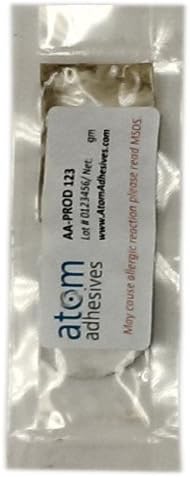
AA-Duct 906 has a 3.7 rating and occupies a specialized niche as an electrically conductive silver epoxy for low-volume electronics work. It is intended for applications requiring both adhesion and a conductive path, while the product guidance points users toward AA-Duct 902 when greater conductivity is needed.
We may earn a commission when you buy through this link, at no additional cost to you.
The adhesive comes in a single-use pouch that is mixed in the packet before application, eliminating the need to measure separate resin and hardener components. It has a one-hour working time and hardens at room temperature in 24 hours, making it accessible for occasional or small-scale repair projects.
Its bonding description covers glass, metals, fabrics, wood, and other substrates, but conductivity still depends on the material, contact area, and application quality. The 2.5gm single-use format may also be less economical if only a tiny amount is required. The lower stated rating should be considered alongside the lack of detailed comparative conductivity data.
Choose it when electrical continuity and structural bonding are both necessary, especially for low-volume work. It is less appropriate when the task only needs insulation or when a high-volume manufacturing process requires precisely metered, fast-curing conductive adhesive.
The premixed single-use pouch is a major convenience for occasional repairs, allowing the resin and hardener to be combined directly in the packet before application.
A one-hour working window and 24-hour room-temperature hardening can simplify work outside a temperature-controlled production line, provided the bond is left undisturbed to cure.
We may earn a commission when you buy through this link, at no additional cost to you.
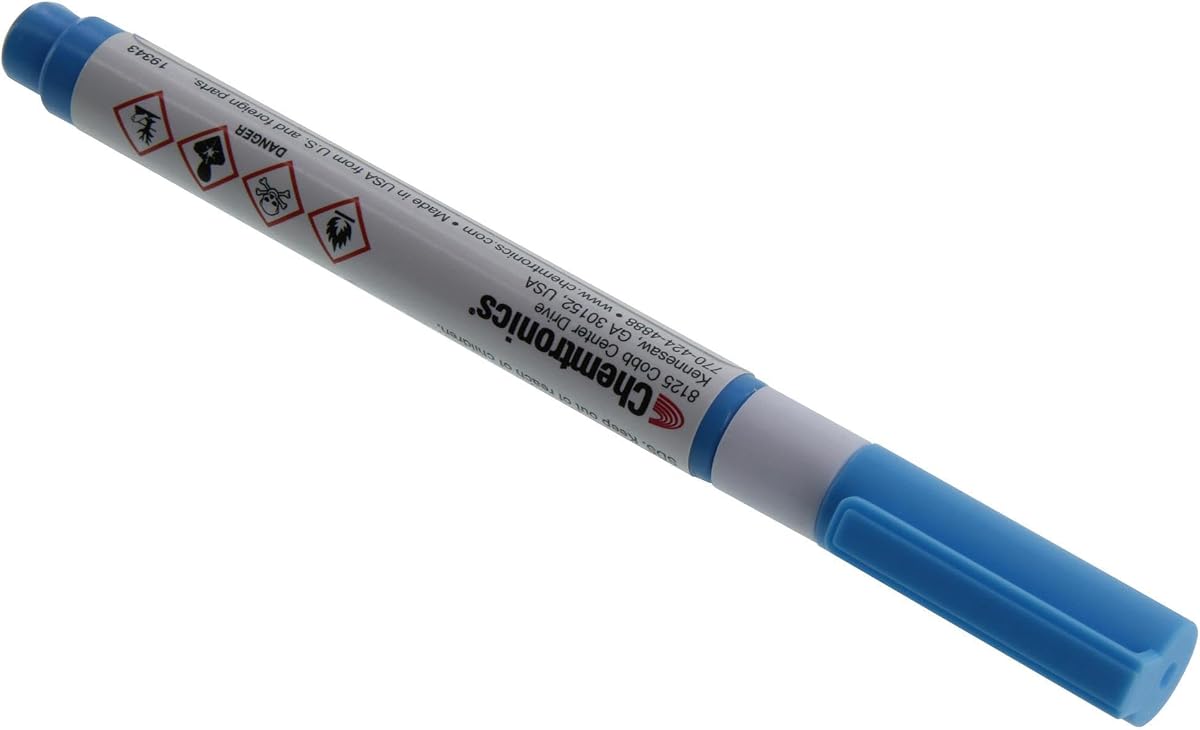
CHEMTRONICS CW2000 has a 4.5 rating and is a gray, conductive nickel acrylic adhesive supplied in a 9g container with a dispenser and tools. Its position at the premium end of this list comes from the specialized conductive formulation and the inclusion of application accessories rather than a larger container size.
We may earn a commission when you buy through this link, at no additional cost to you.
Conductive acrylic chemistry can be useful where an electronic component must be bonded while still participating in an electrical path. The included dispenser and tools help users apply small quantities more consistently, which is important because gaps, excess material, or poor contact can influence the electrical result.
The available product information does not provide a conductivity figure, resistance range, cure time, or detailed compatibility list. Buyers should therefore consult current technical documentation and test the material before using it in a safety-critical or production-critical assembly.
For a specialized conductive application requiring a nickel acrylic adhesive and dedicated dispensing hardware, CW2000 is the most purpose-built option here. Choose it when controlled delivery and conductive bonding are more important than the convenience of a general repair glue.
The bundled dispenser and tools indicate a focus on controlled placement, which is valuable when working with conductive material around compact electronic assemblies.
The nickel-filled acrylic formulation distinguishes this adhesive from silicone sealants, thermal glues, and nonconductive precision glues by creating a potentially electrically conductive bond.
We may earn a commission when you buy through this link, at no additional cost to you.
The correct adhesive depends on the job's mechanical load, heat exposure, electrical requirements, sealing needs, application method, and cure time. Comparing these factors before buying prevents a convenient general-purpose glue from being used where thermal transfer, conductivity, or environmental resistance is essential.
Begin by deciding whether the bond needs to conduct electricity, resist current, or merely hold components together without creating an unintended pathway. The AA-Duct 906 silver epoxy and CHEMTRONICS CW2000 nickel acrylic are purpose-built conductive choices, while silicone sealants, thermal adhesives, and T-7000 or T8000 repair glues are not presented as electrical conductors. A nonconductive adhesive may be essential around exposed contacts, sensors, high-voltage areas, or components whose exact grounding is important.
Choose a conductive product only when the connection is designed to carry current. Otherwise, favor an insulating sealant or nonconductive glue to reduce the chance of shorts and unintended electrical paths.
Heat-generating parts require a different material from ordinary repairs. The Easycargo thermal glue and 50gram conductive thermal glue are intended to bond components to heatsinks, with the latter publishing conductivity of 0.975 W/m-K. Thermal performance depends on a thin, even bond with no voids, so a high-adhesion product does not automatically provide the best heat transfer.
Use a thermal adhesive only where the manufacturer lists the target component. In particular, the 50gram product explicitly says it is not for a CPU-to-heatsink interface, and ordinary repair glue should not be substituted for an approved thermal interface material.
Electronics may encounter heat, cold, moisture, dust, sunlight, or condensation during service. The Electronic Silicone Adhesive Sealant states a range of minus 50°C to 200°C, while the T8000 clear glue lists a usage range of minus 35 to 90°C. Silicone products are especially relevant when the repair must remain flexible and resist water.
Check both the operating and storage limits of the entire assembly. A strong room-temperature adhesive is a poor choice for an outdoor enclosure or hot component unless its temperature rating and environmental resistance cover the expected conditions.
A rigid assembly may benefit from an epoxy or acrylic, while mobile devices, speakers, screens, and wearable parts may need flexibility to survive vibration, impact, and dimensional movement. The T-7000 products are described as highly elastic, with one stated stretch of up to 900%, and the T8000 product is also described as flexible after curing.
Balance flexibility with stiffness. A very soft adhesive may hold a small part well but permit unwanted movement, while a rigid bond can crack around components that expand and contract differently. The correct choice reflects the stress, movement, and weight of the repaired assembly.
Precision repair work benefits from needle tips, small tubes, syringes, or included tools. The ALECPEA T-7000, T-7000 kit, and T8000 set all emphasize controlled dispensing, while the CW2000 includes a dispenser and tools. These formats reduce accidental overflow around small connectors and make it easier to place adhesive only where it is needed.
For larger sealing or coating work, a flowable or conformal silicone may be more efficient than a precision nozzle. Match the container and applicator to the size of the joint, the number of repairs, and the level of control required.
Cure time determines how long a component must remain supported and when an assembly can safely return to service. The 50gram thermal adhesive states an approximately 30-minute drying time at 25°C, the AA-Duct 906 has a one-hour work time and 24-hour room-temperature hardening, and the T-7000 products can require 24 to 48 hours to reach maximum strength.
Allow the full manufacturer-stated cure period under relevant conditions. Handling a bond early can reduce strength, especially for adhesives that rely on gradual moisture exposure, chemical reaction, or controlled heat transfer.
Adhesives are not equally compatible with plastics, metals, glass, rubber, ceramic, fabrics, solder finishes, coatings, or printed circuit boards. The listed substrates vary considerably: ASI 388 is highlighted for corrosion-sensitive metals, while T8000 and T-7000 are promoted for broad consumer and craft material compatibility. Thermal compounds also require a suitable surface and physical contact.
Clean and test a small area first, and review the current manufacturer instructions. A repair involving a valuable, irreplaceable, safety-critical, or high-energy component deserves more verification than a low-risk craft application.
Package size affects both convenience and waste. The T8000 set includes three tube capacities and a tool kit, the T-7000 products include two tubes, and the ALECPEA version adds a needle dispenser and anti-clog cap. The AA-Duct 906 uses a single-use pouch, while CW2000 provides a 9g container with professional accessories. Choose based on repair frequency rather than package size alone.
A well-equipped package can save time and reduce handling errors, but extra volume is not a benefit if it will expire unused. Check the supplied applicators, storage needs, shelf life, and whether the product suits occasional or repeated work.
Before applying any adhesive, remove dust, oil, flux residue, moisture, and loose particles from the bonding surfaces. Disconnect the device from power, remove the battery when appropriate, and keep the work area clean and ventilated. Use the application method recommended for the product: a needle tip for fine repairs, a controlled bead for a joint, or conformal coverage for a protective silicone layer.
Dispense only the amount needed, position the component correctly, and hold or support it in the required position while the adhesive cures. Follow the stated timing carefully, including any separate positioning period and full-strength cure. Avoid spreading the material beyond the intended joint, and do not use a thermal compound where the manufacturer has explicitly excluded the device.
After curing, inspect the bond for movement, gaps, residue, or incomplete coverage. Store precision tips carefully, close containers after use, and follow the listed storage range, such as 10°C to 28°C for the T8000 product. Replace the product if its tip clogs or the compound becomes difficult to apply, and test compatibility on a concealed area before reusing the adhesive elsewhere.
A thermal adhesive designed for heatsink bonding is usually the appropriate choice. The Easycargo thermal glue and 50gram conductive thermal glue are both intended for supported applications such as LEDs, GPUs, MOSFETs, voltage regulators, chipsets, and printers. Always verify the device-specific instructions, because the 50gram compound explicitly is not intended for a CPU-to-heatsink interface.
Yes, but only select products are designed to conduct electricity. The AA-Duct 906 uses conductive silver epoxy, while CHEMTRONICS CW2000 is a nickel-loaded conductive acrylic adhesive. Silicone sealants, thermal glues, and general precision repair glues in this guide should not be treated as intentional electrical connectors unless the manufacturer states otherwise.
Water resistance is only one part of outdoor suitability. The Electronic Silicone Adhesive Sealant combines waterproofing with a stated minus 50°C to 200°C range, while other products may have narrower usage limits. Check the operating temperature, ultraviolet exposure, enclosure design, substrate compatibility, and curing conditions before using any adhesive in an outdoor installation.
Cure time varies considerably by product and bonding thickness. The 50gram thermal glue lists approximately 30 minutes at 25°C, AA-Duct 906 lists one hour of working time and 24-hour room-temperature hardening, and the T-7000 products can require 24 to 48 hours for maximum strength. The product's full instructions should take priority over a generic cure estimate.
A sealant primarily closes gaps and protects against moisture or environmental exposure. A thermal adhesive is designed to transfer heat while retaining a component in position. A conductive epoxy combines structural bonding with an electrical pathway, which is essential only when the joint is intended to conduct current. Choosing by function prevents an unsuitable material from being asked to perform all three roles.
It depends on the product and the location of the bond. T-7000 and T8000 products list electronic components, phones, computers, speakers, and displays among their uses, but circuit boards contain sensitive traces and components that may be damaged by misplaced adhesive. Confirm material compatibility, avoid conductive pads unless the product is intended for them, and test a small concealed area first.
Flexible adhesives are often preferable for mobile devices, speakers, screens, wearables, and housings that may flex, vibrate, or experience thermal dimensional changes. Rigid adhesives can be appropriate for stable mounts and heat-sink interfaces. The best choice depends on the load, movement, and thermal cycle expected after the component is assembled.
Yes. Even products advertised for broad compatibility can react differently with specific plastics, coatings, metals, solder finishes, or printed markings. Testing on a concealed area and confirming the manufacturer's instructions helps reveal poor adhesion, discoloration, residue, or incompatibility before a valuable or irreplaceable component is committed to the repair.
The Electronic Silicone Adhesive Sealant is the strongest general choice for conformal protection, environmental sealing, and insulation across many types of electronics. The ALECPEA T-7000 stands out for accessible precision repair, while the Easycargo thermal glue serves the distinct purpose of permanently bonding supported heatsinks and other thermally stressed components.
For specialized work, prioritize the function the joint must perform. Use thermal adhesive for heat transfer, conductive silver epoxy or nickel acrylic for an intentional electrical path, and flexible clear repair glue for screens, speakers, and compact consumer devices. Cure time, substrate compatibility, application control, and environmental exposure are at least as important as the advertised bond strength.
Ratings and product details can change, and current prices should be checked before ordering. Compare the latest manufacturer instructions, confirm that the adhesive is approved for the target device, and favor a small test over risking an expensive electronic assembly.