
Memoryboard Digital Reminder Board
4.5Editor score
Family-managed digital reminders
No interaction required
Large high-contrast display
A tablet designed for an older adult living with dementia must be reassuring, predictable, and easy to operate. Beyond a large display and familiar entertainment, the best devices provide offline activities, remote reminders, strong visibility, and features that reduce the need for complicated troubleshooting or repeated instructions.
This guide compares ten products based on the features supplied for each one, with particular attention to accessibility, caregiver support, interface simplicity, medication routines, display quality, connectivity, and included accessories. It covers purpose-built senior tablets, reminder boards, general Android tablets, and a medication dispenser designed to complement a broader care routine.
The picks illustrate several different ways to support an older person: The Care focuses on offline games and simplified operation, Memoryboard centers on family-managed reminders, and the remaining tablets provide varying degrees of app access, connectivity, and everyday versatility. Product prices and availability can change, so readers should confirm current details before purchasing.
4.5Editor score

5.0Editor score

3.9Editor score
As an Amazon Associate we earn from qualifying purchases.
This side-by-side overview compares the ten listed products by their most useful accessibility, display, connectivity, caregiver, and routine-support features. The list includes dedicated senior devices, reminder-focused hardware, medication management equipment, and flexible Android tablets, making clear that the most appropriate choice depends on the user's abilities and daily care needs.




The Care receives a 5.0 rating and stands out as the most directly aligned product in this guide for an older adult who may find conventional tablets confusing. Its defining feature is a library of more than 100 preloaded games and books that work without an internet connection. That reduces the need to troubleshoot accounts, connectivity, downloads, or app stores during daily use, while providing activities designed for senior citizens.
We may earn a commission when you buy through this link, at no additional cost to you.
The tablet offers both a super-organized mode and a super-simple mode, allowing two levels of structure without changing the hardware. Its 10-inch capacitive touchscreen provides a practical viewing area, and the supplied accessories include a charger, headphones, USB adapter, protective sleeve, stylus, and stand. A separately identified silicone cover is also available with a better grip for senior fingers, exposed camera, buttons, and speakers, and compatibility with the included sleeve.
The compromises are meaningful. With 2GB of RAM and 32GB of storage, this is not a high-performance general-purpose tablet, and the specialized software is likely to be less flexible than a full Android device. It also does not list cellular connectivity, camera quality, or a conventional family reminder system among its stated strengths. For someone who mainly needs safe, engaging offline activities in a predictable format, those limitations are easier to accept.
The Care is the strongest overall choice when the priority is reducing frustration rather than maximizing app choice. It is particularly suitable for a person who enjoys games, reading, and guided leisure activities but may not reliably manage WiFi, app downloads, or complex settings. Caregivers can use the stand and sleeve, provide headphones when appropriate, and keep the device configured in the simpler mode.
The more than 100 preloaded games and books can be opened without an internet connection, which is valuable when connectivity is inconsistent or the user does not remember where an app is. This keeps entertainment immediately accessible rather than dependent on remote support.
The organized and simple modes offer useful flexibility for changing abilities. A caregiver can begin with the simpler presentation and move to a more structured view only when that better supports the user's independence.
We may earn a commission when you buy through this link, at no additional cost to you.
Memoryboard has a 4.5 rating and is built around a different but equally practical idea: the older adult should not need to manage a traditional tablet. Family members and caregivers send messages, reminders, appointments, daily prompts, and photographs from a phone, and the content automatically appears in large text on the board. No recipient login, app navigation, tapping, or swiping is required.
We may earn a commission when you buy through this link, at no additional cost to you.
The Care Circle feature allows adult children, relatives, friends, and caregivers to participate, which makes the system useful for shared caregiving. It can be used for medication prompts, meal and hydration reminders, daily schedules, family check-ins, appointments, and reassuring messages. The supplied information specifically states that there is no monthly subscription, while the 10.1-inch version is sized approximately 10.25 by 7 inches for a nightstand or side table.
The main limitation is dependence on the correct network environment. It requires a 2.4GHz WiFi network and does not support a 5GHz-only network, so some homes may need router configuration or support. It is also a reminder display rather than a general entertainment tablet, and it cannot be assumed to offer the same apps, games, and browsing flexibility as a standard Android device.
Memoryboard is the strongest option here for structured family communication and routine support. It suits a person who benefits from repeated visual prompts but should not be asked to check messages or operate a complex interface. Before installation, confirm that the household's WiFi broadcasts a compatible 2.4GHz network and establish which relatives will manage the Care Circle.
Because updates appear automatically, the person can receive reminders without searching for an app or understanding how notifications work. This passive design can be especially helpful when short-term memory and navigation skills are impaired.
Several trusted family members can contribute messages, prompts, and photos through the Care Circle. This distributes routine support without requiring the senior to manage multiple accounts or maintain contact lists.
We may earn a commission when you buy through this link, at no additional cost to you.
Pix Star Touch carries a 2.9 rating, the lowest listed score, but its stated design priorities are relevant to the question of a tablet for elderly with dementia. The interface is intended to be easy for beginners, with important buttons emphasized so a senior does not have to decode a densely populated screen. A zoom function can enlarge or reduce the interface as required.
We may earn a commission when you buy through this link, at no additional cost to you.
The 10.1-inch tablet supports email, internet, video conferencing, photos, and social media while also allowing users to install additional applications through the Google Play Store. Front and rear cameras make it practical for family calls and sharing photographs. The product data notes that automatically captured photos are stored on the tablet, allowing them to be shared with a few actions.
Its low rating is the most important reason for caution. A low score may reflect buyer satisfaction, product quality, or the experience of using the simplified software, but the supplied information does not identify the cause. The 32GB storage capacity may also become limited if many photos, videos, and applications accumulate. Accessibility claims and the device's actual responsiveness should therefore be evaluated carefully before relying on it as a primary care tool.
Pix Star Touch may still be a good fit for a person who primarily wants family video calls and photographs and has a caregiver nearby to assist. The zoom control and simplified layout are meaningful advantages over a dense standard Android interface. For households prepared to provide some support, its communication focus is more relevant than its position in the rating list.
The ability to enlarge or reduce the interface can make controls easier to locate for users with reduced vision. It also allows a caregiver to adjust the display without moving the device closer.
A front camera supports face-to-face conversations, while a rear camera records people and surroundings. Together, they make the tablet more useful for both calls and everyday family photos.
We may earn a commission when you buy through this link, at no additional cost to you.
PRITOM Touch10 has a 3.9 rating and offers a balanced general-purpose Android tablet at the budget end of this comparison. Its 10-inch 1280 by 800 IPS display is large enough for reading, video, and simple touch interaction, while the Eye Health mode filters blue light and adjusts backlight for more comfortable viewing.
We may earn a commission when you buy through this link, at no additional cost to you.
The tablet runs Android 13 with Google Mobile Services certification, 4GB of RAM plus a stated 2GB extension, and a quad-core processor. It includes 64GB of internal storage and a microSD slot supporting expansion up to a stated 512GB, although the card is not included. A 6000mAh battery is advertised for up to eight hours of mixed reading, television, browsing, and light gaming.
It is not designed specifically for cognitive impairment, so a caregiver may need to reduce the number of visible apps, enlarge text, set brightness appropriately, and remove distractions. Front and rear cameras support basic calls and photos, and the product data says there is no extra bloatware. The included one-year warranty adds some reassurance, but it does not replace careful setup.
This is a sensible budget pick when the senior wants normal apps, familiar streaming services, and family communication without the restrictions of a dedicated entertainment device. It is best for users who can still learn a simplified home screen or who have reliable caregiver support. Compared with more specialized options, its advantage is flexibility rather than built-in dementia-focused guidance.
Sixty-four gigabytes provides more room for downloaded applications, photographs, and media than many entry-level alternatives. Expandable storage also creates a practical route for adding capacity later without replacing the tablet.
The stated 6000mAh capacity and eight-hour mixed-use estimate make the device suitable for extended reading, television, and light activity. Keeping it near a regular charging location can help prevent routine interruptions.
We may earn a commission when you buy through this link, at no additional cost to you.
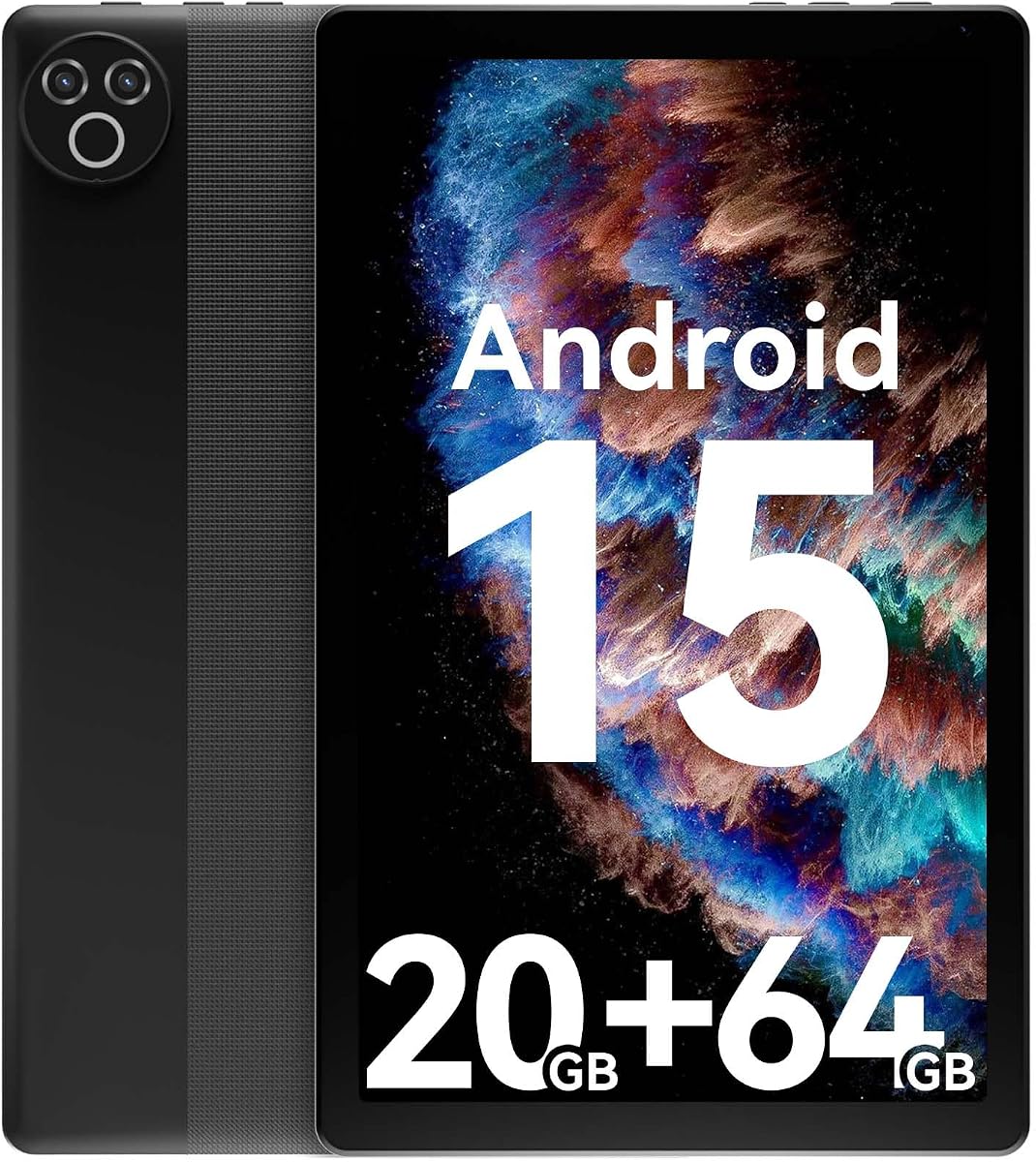
This Android 15 tablet has a 3.7 rating and brings current operating-system and wireless features to the list. It is GMS certified, so users can access popular applications directly through the Google Play Store. Its 1.8GHz five-core processor and stated 20GB RAM, including 3GB physical and 17GB virtual memory, are designed to support app launches, video, gaming, and multitasking.
We may earn a commission when you buy through this link, at no additional cost to you.
The 10-inch in-cell IPS touchscreen has a 1280 by 800 resolution and low-blue-light technology intended to reduce visual strain from flicker and harsh blue light. Storage starts at 64GB and can be expanded through a TF card up to a stated 1TB, though that card is not included. A 5MP front camera and 8MP rear camera cover calls and photography.
The 5000mAh battery is listed with up to three days of standby or up to five hours of mixed use. Those are different measures, so realistic expectations should be based on the user's actual activities. Standard Android 15 also means more settings, permissions, and applications than a purpose-built senior device, potentially making the interface more confusing if the user has significant cognitive impairment.
The tablet is a good match for a household that wants modern connectivity and app flexibility while providing a simple home screen and caregiver supervision. WiFi 6 and Bluetooth 5.4 offer useful wireless compatibility, while expandable storage and a full-size display support a wide range of activities. It is less automatically dementia-friendly than The Care or Memoryboard.
Google Play access allows the household to select communication, entertainment, and accessibility tools that match the user's existing routine. The 10-inch screen can display those apps at a more comfortable size than a phone.
Dual-band WiFi 6 support can provide a stable connection on compatible 2.4GHz and 5GHz networks. The router should be configured with a clear password and a network name that is easy for a caregiver to recognize.
We may earn a commission when you buy through this link, at no additional cost to you.
Jeazans Android 16 has a 3.6 rating and stands apart with its included AI smart speaker dock. The dock keeps the tablet charged, serves as a room-filling stereo speaker, and provides ambient lighting that can synchronize with music. It also supports an AUMI AI OS clock screensaver mode and a digital photo frame function, allowing familiar images to remain visible between uses.
We may earn a commission when you buy through this link, at no additional cost to you.
The tablet has a 10-inch IPS display with 800 by 1280 resolution, an eight-core processor, and stated 36GB RAM consisting of 6GB physical and 30GB virtual memory. Internal storage is 64GB and can be expanded to 1TB with a TF card, which is not included. Google Play is preinstalled, while WiFi 6, Bluetooth 5.4, and a 6000mAh battery support everyday use.
The dock is both its most distinctive feature and a possible complication. It must be placed near a power outlet, and the user or caregiver needs to understand how the magnetic charging and different display modes work. The tablet's claimed dock-based standby time and playback estimate should not be confused with continuous general-use battery life. Like other standard Android models, it also does not provide a dementia-specific interface.
This is a good option for a bedroom, lounge, or family room where music, familiar photographs, and a clock are desirable alongside normal tablet functions. The dock makes the device feel more like a permanent home hub than a portable screen. It is best for households willing to simplify the Android interface and use the dock as a consistent home station.
The combination of charging, sound, ambient lighting, clock mode, and photo display can make the tablet useful even when no interactive task is underway. Familiar music and photographs may also provide comfort and orientation.
WiFi 6, Bluetooth 5.4, and expandable storage support a connected setup with room for downloaded media. Caregivers can organize downloaded content in advance so the user does not need to browse a crowded store.
We may earn a commission when you buy through this link, at no additional cost to you.
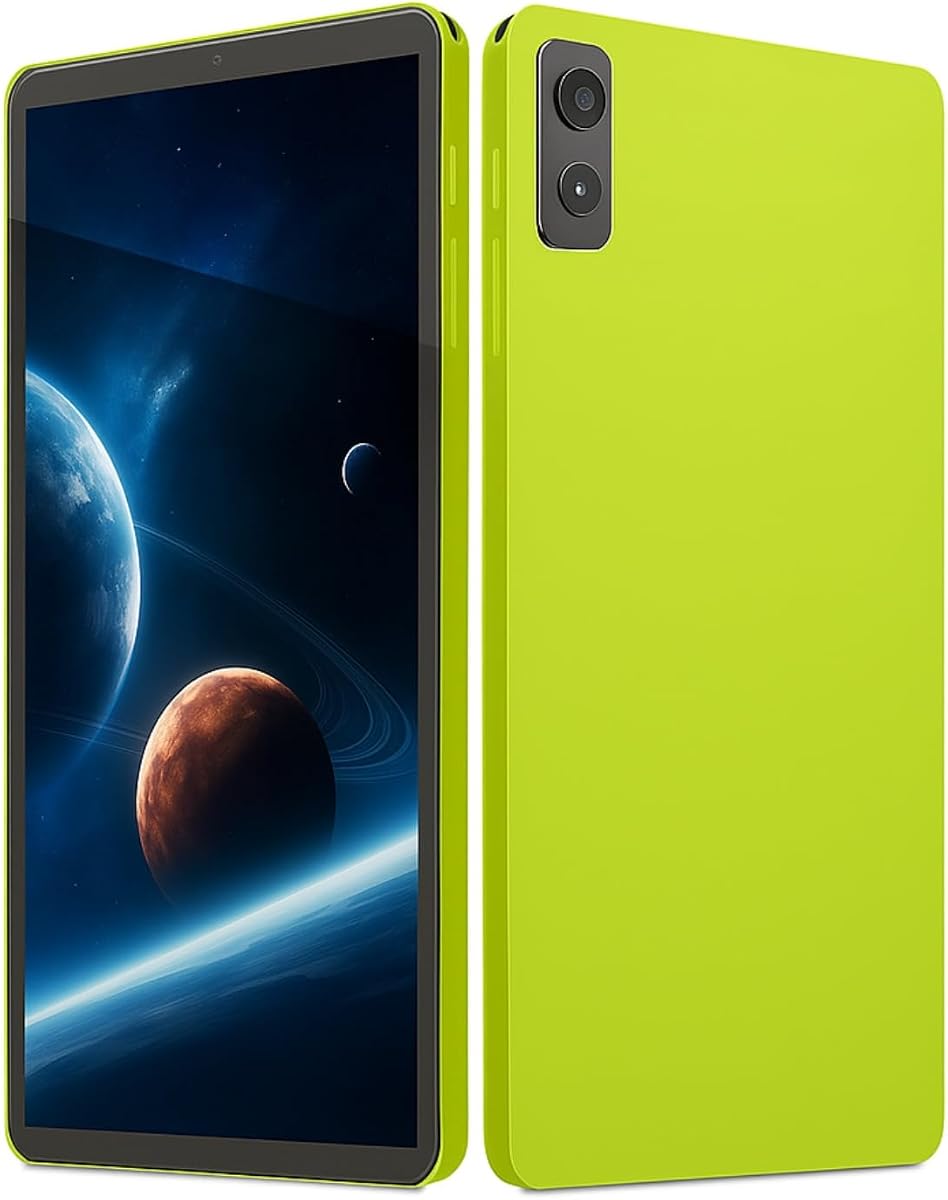
This compact Android 15 tablet has a 3.4 rating and uses an 8.7-inch laminated display with 1340 by 800 resolution. The smaller format may be easier to hold, carry, or place close to the user than a 10-inch model, although it offers less visual space for family photos, reading, and remote communication.
We may earn a commission when you buy through this link, at no additional cost to you.
It is GMS L1 certified, providing access to services such as YouTube, Gmail, and Maps. The RK3562 quad-core processor is stated to reach up to 2.0GHz, while 8GB of RAM includes extended virtual memory. Storage is 64GB and can be expanded by a stated 512GB through microSD. A 2MP front camera, 5MP rear camera, dual speakers, GPS, 5G WiFi, and Bluetooth 5.0 broaden its everyday functions.
The 5000mAh battery is designed for daily reliability, though the supplied information does not provide a specific mixed-use duration. The tablet is also standard Android rather than a dedicated senior device, so the same concerns about clutter, app choices, and accidental navigation apply. A protective case and simplified launcher would be sensible additions if the user has reduced grip strength or tends to tap unpredictably.
The compact model is most appropriate when portability, lighter handling, and location features matter more than maximum screen size. It can serve as a portable entertainment and communication device for short sessions away from a home station. For long reading or large family video calls, a 10-inch option may be easier to see.
The 8.7-inch screen can be easier to carry between rooms or use during short outings. Its lighter format may also reduce the fatigue associated with holding a larger device.
GPS can help with maps and orientation when the user travels. It should be used as a supplementary feature rather than a replacement for supervised navigation or an emergency response plan.
We may earn a commission when you buy through this link, at no additional cost to you.
The Retekess TH017 is not a tablet, and it should not be presented as one. It is an automatic medication dispenser included in this guide because medication routines are a central concern for many people living with dementia. The product has a 4.2 rating and uses an automatic pop-up design, eliminating the need to flip, twist, shake, or pour compartments.
We may earn a commission when you buy through this link, at no additional cost to you.
A built-in mechanical timer lock secures the compartments until the scheduled time. Caregivers can remotely edit, adjust, and synchronize medication schedules through cloud setup, and as many as five caregiver accounts can share management. Cloud notifications provide medication alerts and device status updates, while bright LEDs, adjustable alarm volume, and three reminder tones allow prompts to suit different hearing and environmental needs.
The dispenser has 21 separated compartments to reduce tablet movement, friction, and residue, including support for delicate extended-release and enteric-coated tablets. It uses a rechargeable lithium battery and provides up to nine daily alarms for different schedules. Despite these features, the supplied information explicitly states that the reminder function is auxiliary and cannot replace medical devices. Users must follow doctor's instructions and take medication on time.
This product is best considered alongside a tablet, not as a replacement for one. A family could use Memoryboard for broad routine prompts, a senior tablet for activities and communication, and the TH017 for a carefully established medication schedule. Professional guidance and pharmacy review remain important because automated dispensing cannot judge whether a person actually swallowed the correct dose.
The automatic opening reduces several physical actions that may become difficult with limited grip strength, stiff joints, or memory impairment. A mechanical lock also keeps compartments inaccessible until their configured time.
Remote editing, status notifications, and multiple caregiver accounts provide a clearer record of who is managing the schedule. Audible tones and bright LEDs provide several ways to notice a reminder, although the user should still be checked safely.
We may earn a commission when you buy through this link, at no additional cost to you.
The HAOVM Android tablet carries a 4.1 rating and distinguishes itself through an unlocked SIM card slot and 4G LTE connectivity. That allows the user to remain online for video calls and content even when a home WiFi connection is unavailable, which is useful for travel, outdoor use, or a household with an unreliable broadband signal.
We may earn a commission when you buy through this link, at no additional cost to you.
The 10.1-inch IPS touchscreen supports 16.7 million colors and a stated 178-degree viewing angle. It includes stereo speakers, an 8MP camera, built-in GPS, dual-band 2.4GHz and 5GHz WiFi, Bluetooth 5.0, and wireless projection to a television. The 5000mAh battery is advertised for up to eight hours of mixed use. A detachable anti-drop silicone case includes a folding stand, allowing the tablet to be positioned hands-free.
Its 3GB of RAM and 32GB internal storage are less generous than several competing tablets, although microSD expansion offers flexibility. Cellular service requires a compatible SIM and account, adding another layer of setup. Android 14, Focus Mode, Reading Mode, and Eye Comfort features can assist with a calmer experience, but the supplied data does not state that the operating system has been specifically adapted for dementia.
HAOVM is a strong option for a person who spends time away from reliable WiFi and already uses a cellular-connected device comfortably. The included stand and protective case make it practical for a bedside chair or table. Caregivers should simplify the home screen, limit unnecessary apps, and set up the SIM and accessibility preferences before handing it over.
The 4G option allows calls, messaging, and browsing without depending exclusively on a home network. It can provide continuity during travel or temporary WiFi outages when a suitable SIM plan is active.
The included detachable silicone case protects the device and folds into a stand for hands-free viewing. That is useful for family calls, television projection, and keeping the tablet at a consistent height.
We may earn a commission when you buy through this link, at no additional cost to you.
PRITOM Tronpad has a 3.9 rating and combines a 10-inch Android tablet with the option of 3G phone calls through a SIM card. It uses Android 13 Go, 2GB of RAM, a quad-core processor, and 64GB of internal storage. A micro TF slot supports expansion up to a stated 512GB, making it possible to keep more videos, photographs, and music locally.
We may earn a commission when you buy through this link, at no additional cost to you.
Its 1280 by 800 IPS display includes an Eye Health mode designed to filter blue light and optimize backlight for reading. Front and rear cameras are rated at 2MP and 8MP, while dual speakers provide clearer and louder audio than a single-speaker tablet. The supplied information also notes a headphone jack, GPS, Bluetooth, and USB-C connectivity.
The device advertises up to eight hours for mixed reading, television, browsing, and light gaming, subject to real-world use. Android 13 Go is designed for lighter use, but the tablet is still a general-purpose device with normal setup demands. Users with dementia will benefit from a simplified launcher, carefully selected apps, and an established charging routine. SIM compatibility must also be checked because the description explicitly refers to frequency bands.
The Tronpad is a flexible secondary option for someone who wants calls and apps on a larger screen without moving to a more specialized senior tablet. Its 64GB storage and included warranty are attractive, but 2GB of RAM and 3G cellular capability may be less desirable than newer performance and 4G. It works best when a caregiver manages setup and keeps essential content readily accessible.
WiFi can handle regular use, while the SIM slot provides an alternative route to connectivity and traditional phone calls. The added cellular option is useful for a user who is more comfortable with calling than managing messaging applications.
The two-speaker arrangement can make video conversations, music, and spoken content more intelligible. A headphone jack also provides a private listening option when background noise or hearing sensitivity makes that preferable.
We may earn a commission when you buy through this link, at no additional cost to you.
The best device for an older adult with dementia is not necessarily the one with the most advanced hardware. Start with the person's current abilities, the level of caregiver involvement available, and the purpose the device must serve, then compare simplicity, visibility, reminders, connectivity, and physical support.
Cognitive impairment can make a standard Android interface difficult because icons, menus, notifications, and hidden gestures may all compete for attention. A purpose-built senior tablet can be more appropriate when the person struggles with app navigation, while a conventional Android device may work when a caregiver can maintain a simplified home screen. The best solution should present only a small number of clearly labeled activities, avoid unnecessary prompts, and keep essential functions in the same location. A caregiver should be able to configure the device once and then correct changes quickly if the user accidentally opens another area.
People with dementia may benefit from seeing the same message repeatedly instead of relying on memory. Memoryboard is purpose-built for this function because family members can remotely send reminders, appointments, prompts, and photographs that appear automatically on a large display. Other tablets can support alarms, calendar events, and caregiver messaging, but the user may need to open an app and interact with it. Caregiver control should include a straightforward way to add, edit, and remove information without making the senior responsible for account management.
A larger screen can make photographs, text, video calls, and games easier to see, particularly for someone with reduced vision. Ten-inch and 10.1-inch models are common in this guide, while the 8.7-inch option prioritizes portability. Display resolution matters less than clarity, contrast, text scaling, and the ability to reduce motion or visual clutter. IPS screens are listed on many of the products, and several include eye-comfort or blue-light filtering. Caregivers should also adjust brightness, screen timeout, text size, and orientation before the device is placed near the user's bed or favorite chair.
Internet access is useful but can also create confusion when a connection drops, an application needs updating, or an advertisement appears. The Care provides more than 100 preloaded games and books with no internet requirement, making it a strong option for uninterrupted leisure. General Android tablets support downloaded television, music, books, games, and family videos, but caregivers must populate them in advance and verify that the content works offline. A good routine includes a small folder of familiar activities, automatic updates that do not interrupt use, and a process for restoring what the user changes.
WiFi provides the simplest home setup, but a 2.4GHz network may be required for some products. Memoryboard specifically does not support 5GHz-only networks, while other models support dual-band WiFi. Cellular connectivity can be valuable for travel or inconsistent home internet, as offered by the HAOVM and PRITOM Tronpad, but it requires a compatible SIM and service plan. Video calling also depends on camera quality, microphone behavior, and the user's ability to initiate or accept a call. Setting up a few approved contacts and teaching one simple calling method is generally more effective than exposing a large contact list.
A tablet that is difficult to charge may quickly become unused. Battery capacities range from 5000mAh to 6000mAh across the listed products, with several claims of up to eight hours of mixed use under specific conditions. A fixed dock, such as the one included with the Jeazans, can simplify charging and create a consistent home station. Protective cases and stands, included with the HAOVM and The Care, help keep the device upright, protected, and visible. A charging routine should be predictable and supervised without removing the user's access to communication when the battery is low.
Limited grip strength, reduced fine motor control, and accidental drops can influence whether a tablet remains useful. A protective sleeve, silicone cover, or detachable case can add grip and protection around edges and controls. The Care's optional silicone cover is specifically designed with senior fingers in mind, while the HAOVM's case includes a folding stand. A stylus may be useful for a person who finds tapping difficult, but it must be stored in a fixed place. Weight and handle design also matter because a large device placed in the lap can be uncomfortable even when the display is easy to see.
A tablet can display prompts and maintain routines, but it should not be relied upon as a medical device. The Retekess TH017 offers a complementary automatic medication dispenser with 21 compartments, timed locking, audible and visual alerts, remote caregiver scheduling, and cloud notifications. Even with this equipment, the user must follow the prescribing instructions, and family members should confirm that medication was actually taken. The safest arrangement combines professional medical guidance, pharmacy input, a written care plan, and clear division of responsibility among caregivers.
Begin by treating the tablet as part of a routine rather than as an unfamiliar gift. Connect it to power, complete the initial setup, add only the contacts and applications that will be used, and ask the user to demonstrate the core action. A simple example might be tapping one large video-call button or selecting one folder of familiar games. Repeating the same interaction at the same time each day helps turn the device into a familiar part of the environment.
Create a consistent charging and storage area. Keep the device on a stable stand, use a recognizable case, and leave enough space to pick it up safely. Charge it at a routine time when the user is less likely to handle the power connection, or use a dock that minimizes plugging and unplugging. Clean the screen gently with an appropriate soft cloth, avoid placing drinks beside it, and check that protective accessories are not blocking speakers, buttons, cameras, or charging contacts.
Use written notes and a small support network to maintain the setup. Record the WiFi name and password securely, list the family members responsible for updates, and keep a simple recovery plan for forgotten passwords or accidental changes. Review downloaded content, notifications, and recently installed apps periodically. If the device becomes confusing or the user's needs change, simplify the home screen again or consider whether a passive reminder display, a medication dispenser, or a more purpose-built senior tablet would provide a better fit.
The easiest device is the one that matches the user's abilities and requires the least navigation. The Care is designed around senior-oriented games, books, and two simplicity modes, while Memoryboard requires no recipient interaction and displays family updates automatically. A standard Android tablet may work if a caregiver configures it carefully and limits the visible apps.
Yes, provided the prompts are clear, consistent, and supported by a caregiver. Memoryboard is specifically designed for remotely managed reminders, schedules, meal prompts, hydration reminders, and family check-ins. A general tablet can also display calendar events and alarms, although the user may need assistance opening the correct application.
An offline tablet can be easier for users who cannot manage connectivity, downloads, or account updates. The Care includes more than 100 offline games and books, reducing dependence on a working internet connection. A WiFi tablet is more flexible for communication, streaming, and downloadable applications, but a caregiver must set up and maintain those features.
A 10-inch or 10.1-inch screen is generally easier to view for reading, photographs, and family video calls, while an 8.7-inch model may be easier to carry. Screen size should be matched to eyesight, grip strength, and viewing habits. Text scaling, brightness, contrast, and a stable viewing position can matter as much as physical size.
No. A tablet can present reminders and support communication, but it should not be treated as a substitute for professional medical equipment. The Retekess TH017 provides dedicated medication compartments, timed alerts, and remote caregiver management, yet its own guidance says that reminders are auxiliary and cannot replace medical devices.
Cellular service can be useful for travel, outdoor use, or locations where WiFi is unreliable. The HAOVM and PRITOM Tronpad offer SIM-related connectivity, while other choices depend on WiFi. The added complexity of a SIM, plan, and compatible frequency bands should be weighed against the user's likely travel needs and caregiver support.
Caregivers should simplify the home screen, remove unnecessary apps, disable unwanted notifications, adjust text and brightness, and create a short list of permitted activities. Some systems may also offer parental or account controls, but these must be configured carefully so legitimate family communication is not blocked. A simple passcode known only to the caregiver can reduce accidental changes.
Introduce one activity at a time in a calm, familiar setting and avoid explaining every feature. Demonstrate the same button, menu, or app repeatedly, then let the user practice with gentle support. Connect the activity to a meaningful routine, such as calling a family member after breakfast, and stop if the person becomes tired or frustrated rather than forcing continued use.
The Care is the strongest overall choice for a person who needs an uncomplicated, offline-centered entertainment tablet, while Memoryboard is the most purposeful option for family-managed visual reminders. The Retekess TH017 provides a different but complementary benefit by supporting medication routines, and the PRITOM Touch10 is a flexible budget Android tablet for familiar apps and larger storage.
The right decision should prioritize the user's current ability to navigate, the amount of caregiver support, and the role the device must play. Passive reminders may be more useful than an open app catalog, offline content may be less frustrating than constant connectivity, and cellular service should be added only when it delivers a clear benefit. Accessory bundles, stands, cases, speakers, and large displays can make an otherwise ordinary tablet substantially easier to use.
Before purchasing, verify the current specification, warranty, network requirements, storage, and accessory details, and check current prices on the linked product pages. Product availability and pricing can change, but the core buying principle remains consistent: configure the device for stability, keep the content familiar, and use it as one carefully supervised part of a broader care plan.